


In a significant move within the competitive landscape of AI coding tools, OpenAI Codex has received a substantial revamp, introducing powerful new features designed to challenge Anthropic’s dominant Claude Code. This update positions OpenAI’s offering as a more versatile and integrated solution for developers and enterprises, particularly with its enhanced desktop agent capabilities.

OpenAI Codex: A New Era of Desktop Automation
The most groundbreaking aspect of the updated OpenAI Codex is its newfound ability to operate seamlessly in the background on macOS systems. This allows Codex to interact with desktop applications, performing actions such as opening programs, clicking elements, and typing, all without interrupting the user’s primary workflow. This innovative approach enables developers to continue their work while Codex handles auxiliary tasks in parallel, significantly boosting efficiency.
Parallel Processing and Agentic Capabilities
The revamped OpenAI Codex can deploy multiple agents simultaneously, each working on different tasks. This parallel processing capability is a game-changer for complex development environments, allowing for faster iteration on frontend changes, comprehensive application testing, and efficient interaction with apps that lack traditional API access. OpenAI envisions Codex as a ‘coding buddy’ that handles the mundane, repetitive tasks, freeing up human developers for more creative and strategic work.
Direct Competition with Anthropic’s Claude Code
This strategic update by OpenAI is a clear response to Anthropic’s recent successes with Claude Code and Cowork, which have gained considerable traction for their remote Mac control features. For a period, Anthropic appeared to be leading the charge in convenient and powerful AI-coding tools. However, OpenAI’s latest enhancements to Codex demonstrate a strong intent to reclaim its position at the forefront of AI-driven development.
Enhanced Web Interaction with In-App Browser
Further extending its utility, OpenAI Codex now includes an in-app browser. This feature allows users to issue commands directly to the agentic tool, which then executes these commands within specific web applications. This is particularly beneficial for front-end development and game creation, where direct interaction with web interfaces is crucial. OpenAI has also indicated plans to expand this capability, allowing Codex to command the browser beyond just web applications on localhost.
Memory, Image Generation, and Extensive Integrations
Beyond its core agentic functions, the new OpenAI Codex introduces several other significant improvements. A preview feature called ‘memory’ enables Codex to recall past work sessions, providing valuable context about a user’s working style and preferences. This allows for more personalized and efficient assistance over time.
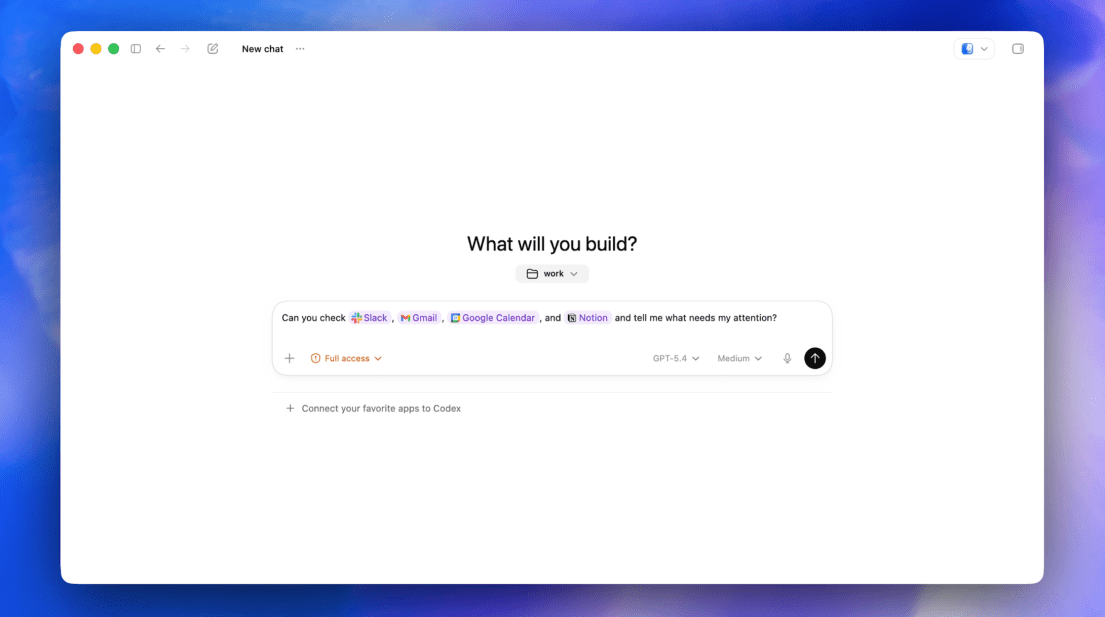
Additionally, Codex now boasts an image-generation ability, capable of creating product concepts, slide visuals, mockups, and placeholder images. This feature is invaluable for designers and marketers, streamlining the creation of visual assets within corporate workflows. To further enhance its versatility, OpenAI has announced 111 new plug-in integrations with popular tools like CodeRabbit, GitLab Issues, Slack, and Google Calendar. These integrations allow Codex to perform a wide array of clerical tasks, from organizing to-do lists based on calendar events and Slack channels to managing project issues.
Flexible Pricing and Future Outlook for OpenAI Codex
In an effort to provide greater flexibility for its users, OpenAI has introduced a new pay-as-you-go pricing option for ChatGPT Enterprise and Business customers utilizing Codex. This move reflects a broader trend in the AI industry towards more adaptable service models, catering to diverse business needs and usage patterns.
The comprehensive overhaul of OpenAI Codex signifies a renewed focus on enterprise capabilities and a strategic pivot in the ongoing AI arms race. While OpenAI has faced various controversies and increased competition, particularly from Anthropic, these updates demonstrate its commitment to innovation and its ambition to remain a leader in the rapidly evolving field of artificial intelligence. The battle for AI coding tool supremacy continues, with developers now having even more powerful options at their disposal.
For more insights into AI advancements, you might be interested in Microsoft’s MAI Models: A New Era of AI Independence and Innovation.
Source: TechCrunch