Perseverance and Odyssey: Science Paused, Not Lost

Summary
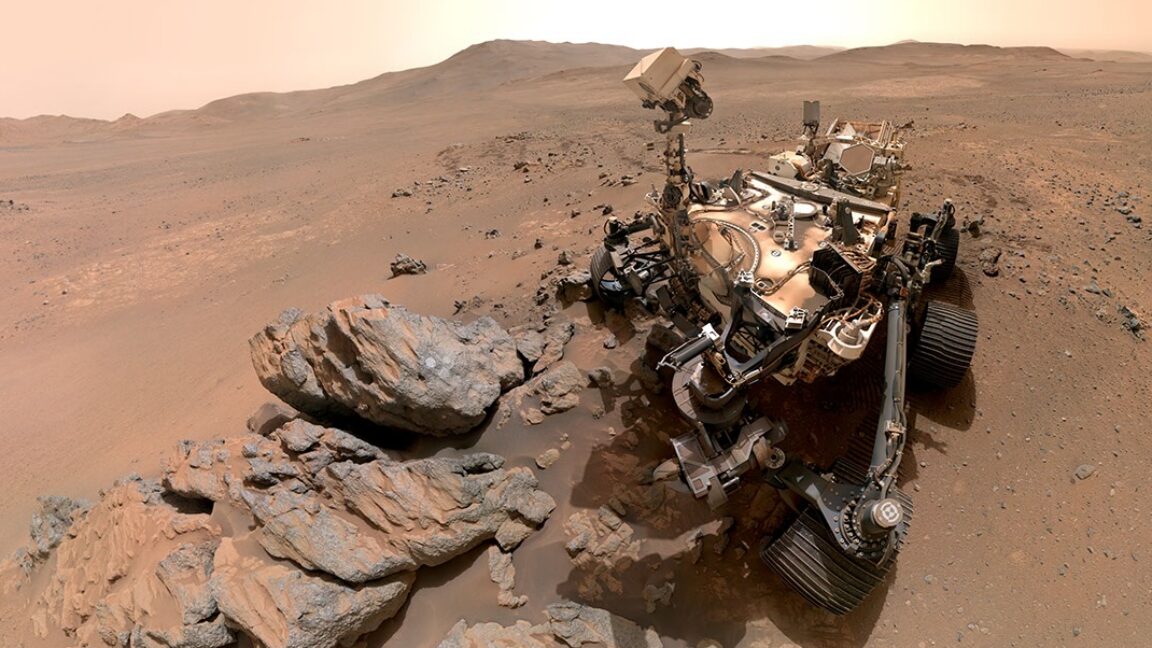
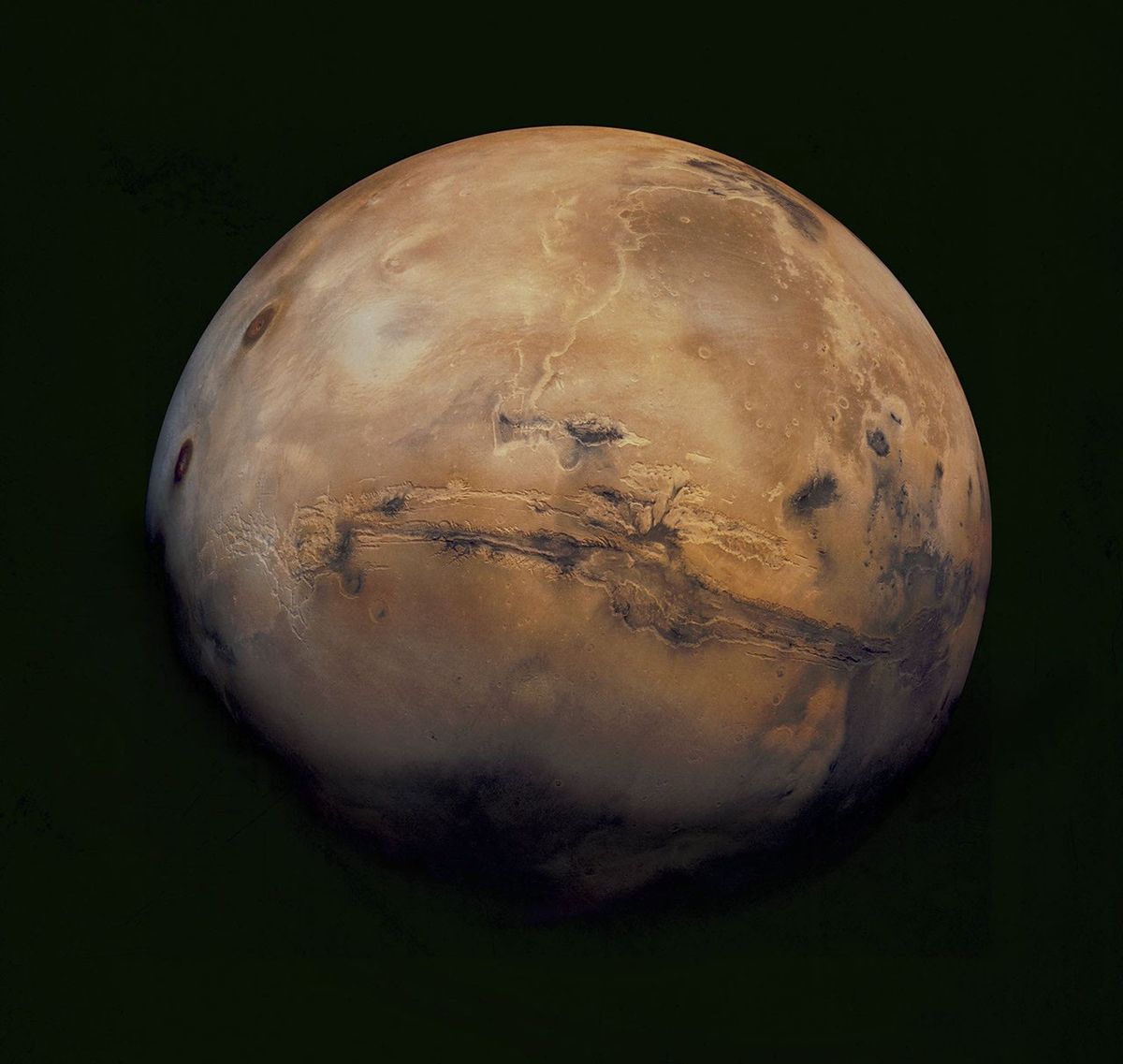
Featured image: NASA/JPL-Caltech/MSSS (featured Perseverance image); NASA/JPL/USGS (Viking Mars mosaic).
Perseverance and Odyssey are facing separate technical problems at Mars, but a pause in science does not mean NASA has lost contact with both spacecraft. The distinction is central to understanding the agency’s November 19, 2026 status report.
NASA says Perseverance is stable and communicating directly with Earth while its UHF radios are investigated. Odyssey is out of safe mode, but its science instruments remain offline while engineers test a malfunctioning reaction wheel. Recovery dates in the report are goals, not confirmed outcomes.
Why Perseverance stopped collecting science

According to NASA’s technical update, Perseverance’s primary downlink radio stopped sending expected electronic heartbeats to the main computer on October 30. After 25 missed heartbeats—about 100 seconds—the rover’s fault protection powered off that radio, switched to its duplicate and entered safe mode.
That automatic switch did not fully solve the problem. Engineers subsequently found that the backup UHF radio was transmitting at roughly half its expected power. Both radios have been taken out of use while teams evaluate causes and determine whether either can safely return to service.
The rover still has another path home. It uses its high-gain antenna and X-band communications to connect directly with NASA’s Deep Space Network. The connection carries significantly less data than the normal UHF relay path through Mars orbiters. Science and instrument operations are paused so the available bandwidth can prioritize diagnostics.
This also explains an apparent silence on the mission’s raw-image website. NASA says the rover is not taking new camera images during the pause. A gap in newly posted imagery is therefore not, on its own, evidence that the vehicle has stopped responding.
Odyssey’s problem is attitude control, not the rover’s radio
Odyssey entered safe mode between November 4 and 6. Investigation found that one reaction wheel had stopped spinning. Reaction wheels help change the spacecraft’s orientation by changing their angular momentum; thrusters also contribute to controlling where the spacecraft points.
Odyssey started with four wheels, but one had already failed in 2013. NASA says at least three are needed to help orient the orbiter. With another unavailable, it must rely on hydrazine thrusters alone to remain oriented. The limited fuel supply makes the fault operationally urgent.
The agency estimates that the remaining hydrazine would support thruster-only orientation for one to two months. That estimate is being refined. It is not a fixed countdown to mission loss, nor a guarantee of recovery before the fuel runs low. During one test, the affected wheel moved after a command; further tests must establish whether it is actually recoverable.
Perseverance and Odyssey face different recovery tests
For the rover, the near-term engineering task is to evaluate the backup radio’s performance and options for bringing it back, before continuing work on the primary radio. For Odyssey, the critical question is whether sufficient reaction-wheel capability can be restored to reduce dependence on finite propellant.
Those are distinct failure mechanisms. The available NASA account does not establish a common cause, and it would be misleading to combine them into a single Mars-wide communications failure. Similarly, being out of safe mode does not automatically mean a spacecraft has resumed science or relay duties.
NASA’s November 19 statement expressed hope for Perseverance science to return by the end of November. It described a goal for Odyssey to return to science and relay operations following testing during the last week of the month. Neither statement should be read as a completed recovery. This article reflects that published status, not an independently confirmed restoration on November 25.
Why Odyssey matters beyond its own instruments
The orbiter arrived at Mars in October 2001, with an original mission designed to last just over two and a half years. NASA credits it with global surface-composition maps, information useful for landing-site assessment, and mapping water molecules in the top meter of the surface.
Odyssey has also relayed information from surface missions, including early post-landing images. Losing relay availability and losing a rover are nevertheless different events. The broader lesson is that science collection, stored data, contact with Earth and long-term mission survival must be tracked separately.
Ars Technica’s November 24 coverage brought renewed attention to these problems. The most useful next update will be an explicit NASA statement about restored radio performance or wheel operation—not merely the passage of a target date. The same distinction between a fault and recovery evidence matters in terrestrial infrastructure, as our Microsoft 365 outage coverage illustrates.