





Summary
Sonos Presets are arriving in a new app update that pairs simpler everyday playback with preparations for the company’s 27voice assistant. The immediate change is practical: saved content can start in chosen rooms at a specified volume with one tap. The voice assistant is a separate early-access experience, with regional and compatibility limits that owners should check before switching.
Sonos Presets put recurring listening on the home screen

Sonos’s official release notes date the update to November 3, 2026. They list Sonos 27.3 with Android build 91.00.33 and iOS build 91.00.41. The notes describe Presets as a way to begin playback of pre-saved content in selected rooms at a specific volume, reducing the steps needed for a familiar listening setup.
A preset is best understood as a shortcut for a repeatable choice. If you regularly use the same content, room and volume combination, it can spare you from selecting those elements again each time. That is different from asking an AI assistant to interpret an open-ended request, and users do not need to confuse the two features.
The update also adds swipe-to-skip on Now Playing and the mini player, plus editing tools to reorder favorites in the new Featured section. These are modest interface changes, but they address actions people repeat more often than exploring a new assistant.
The 27voice early-access rollout is limited to the US
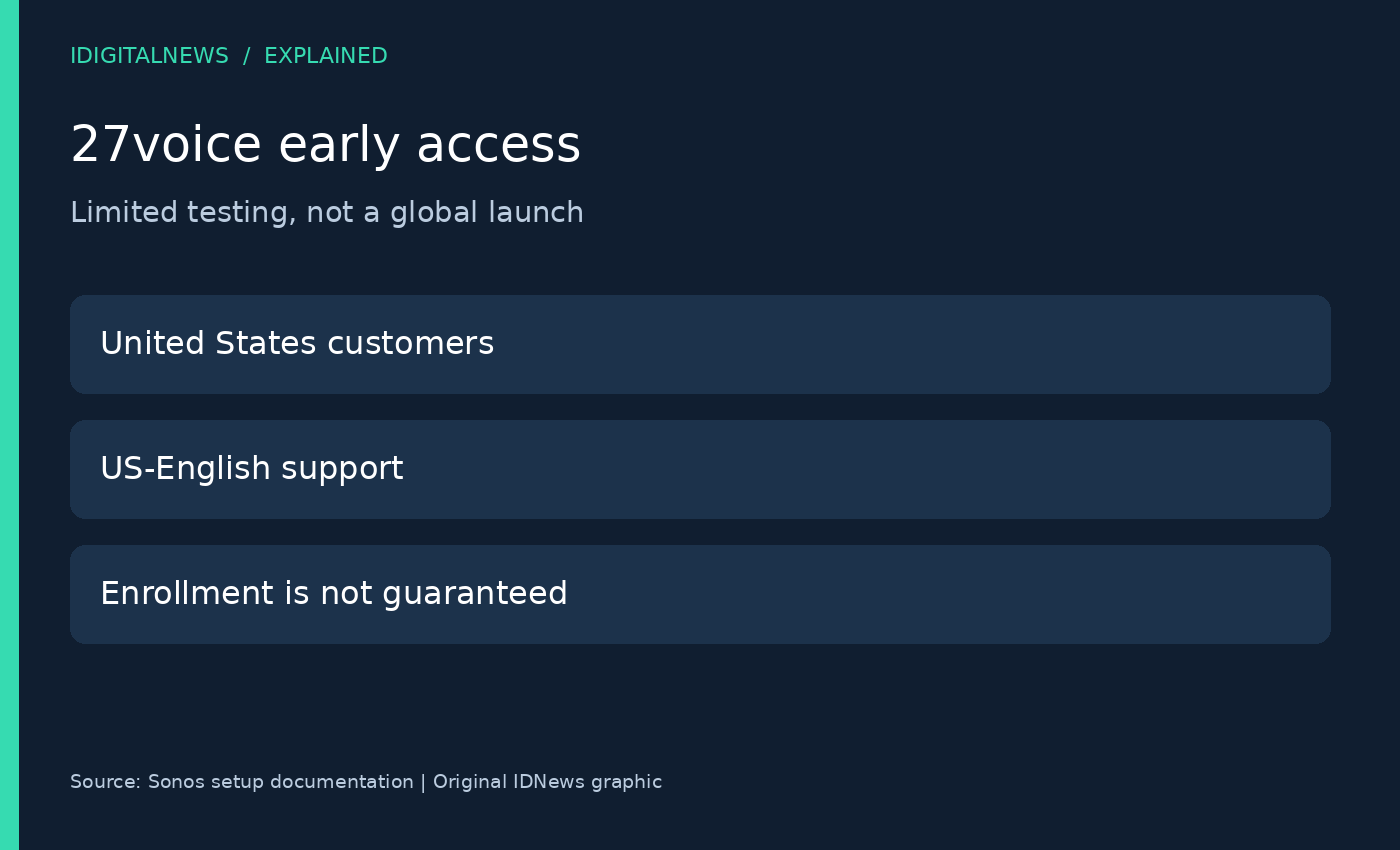
The Verge reports that US users can join the 27voice waitlist on November 6, with access beginning on November 12. Sonos’s own setup page describes limited early-access enrollment for customers based in the United States and support for US-English. It says enrollment is first come, first served and acceptance is not guaranteed.
Those details mean the dates should not be read as a worldwide launch or a promise that every applicant will gain access immediately. Sonos says global availability supporting US-English is planned after early access concludes, but its setup page does not give a specific worldwide release date.
According to Sonos, the assistant can request music, control playback and group or ungroup rooms using natural language. The Verge describes more conversational music requests as well. These are descriptions of intended capabilities, not results from an independent reliability test across services, accents and home networks.
Check assistant compatibility before upgrading
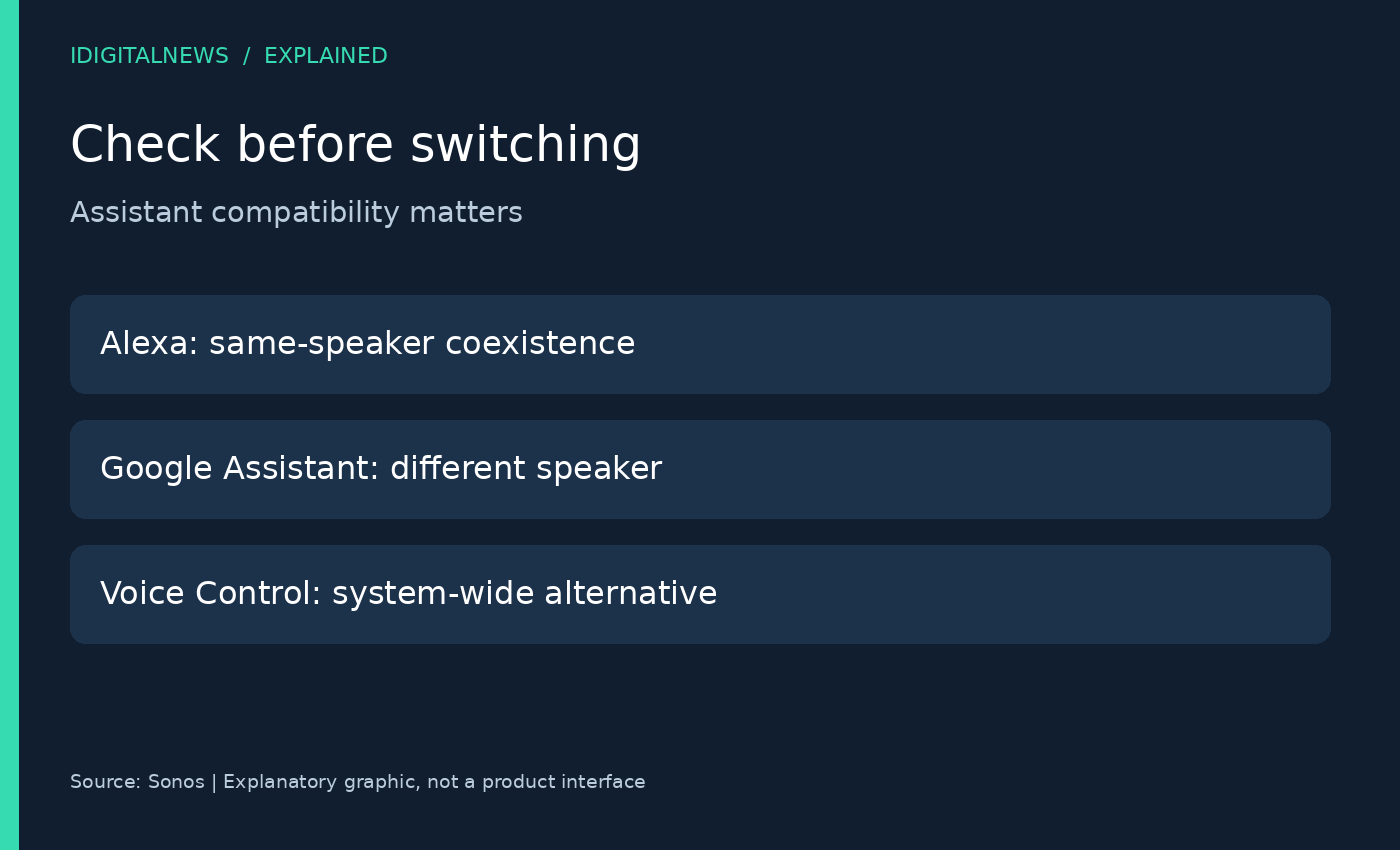
Sonos says 27voice can be added to Sonos products with a microphone. It can run alongside Amazon Alexa on the same speaker. Google Assistant cannot be activated alongside 27voice on that same speaker, although Sonos says Google Assistant can remain on another speaker within the same system.
Another important limit applies across the entire system: Sonos 27voice and the existing Sonos Voice Control cannot both be installed on a single system. The company provides upgrade and downgrade paths between them. Owners who rely on current voice routines should understand that system-wide choice before opting into testing.
For approved users, Sonos’s setup instructions point to Settings, General Settings, Voice Assistants and Add a Voice Assistant, then Sonos 27voice. Existing Sonos Voice Control users have a separate Upgrade option. Availability can depend on the state of the early-access enrollment, so a missing setup tile should not be taken as proof of a hardware fault.
iOS and Android receive different supporting tools
On iOS, the release notes add System Health in the Help Center to identify potential system problems and possible fixes. On Android, the update adds the ability to rearrange connected services. The company also lists improvements to the Update Network experience. These platform-specific additions should not be assumed to appear identically on both operating systems.
Sonos cautions that app releases and individual features can roll out over several days, or sometimes weeks. Checking the relevant app store for the latest version is therefore a sensible first step if a feature is missing. Repeatedly rebuilding a working system is not a necessary response to a staged feature rollout.
For most owners, the sensible sequence is to update, try the new playback shortcuts and confirm that normal listening still works. Eligible US users can then decide whether early-access testing is worthwhile. Presets offer an immediately understandable convenience; 27voice is a separate choice that asks users to accept the uncertainty of a feature still being refined.
Households sharing speakers should also agree on whether to change assistants before enrolling. A system-wide switch affects more than the person pressing the upgrade button. Keeping track of the existing setup and the documented downgrade route makes the experiment easier to reverse if it does not suit everyday listening.
Sources: Sonos documentation | Sonos documentation | The Verge
Related coverage: Gadgets on iDigitalNews.
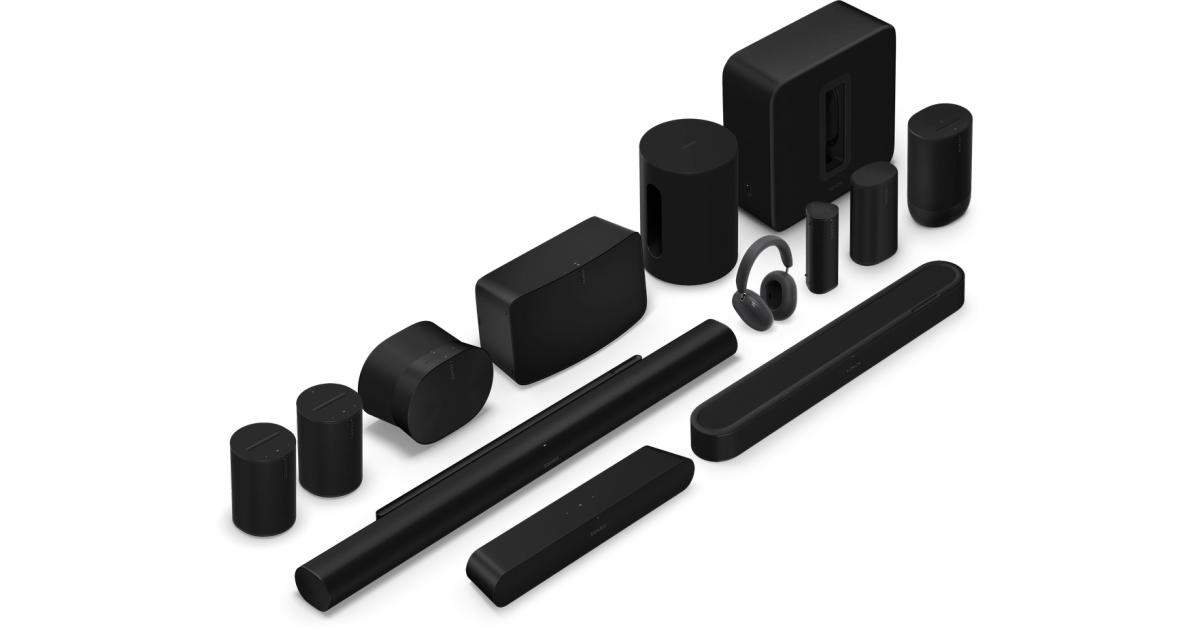
Featured image: Sonos product range; illustrative company image, not a screenshot of Presets or 27voice. Credit: Sonos. Official source.