AI Exoplanet Candidates: Why a Signal Is Not a Planet
Summary
AI exoplanet candidates are promising leads, not automatically newly discovered planets. OpenAI’s account of two amateur-led astronomy projects describes software-assisted searches of public telescope archives that flagged signals for further investigation. As of November 28, 2026, the account says independent assessment and follow-up work are still needed.
The distinction matters because a repeated dip in a star’s brightness can have several explanations. AI can help people write and run search software across a large archive; it cannot turn an interesting pattern into a confirmed world simply by describing it confidently.
What the two searches actually reported
In OpenAI’s account, engineer Kevin Bond used Codex to search Kepler observations of about 100,000 stars. The program flagged more than 200 signals, including 10 associated with already confirmed planets. Recovering known examples is a useful sanity check, but it does not establish that all the remaining signals are planets.
Two signals received particular attention. The report describes a dip repeating every 13.8 days around KIC 5689121 and another every 4.8 days around KIC 6691030. An astronomer at the SETI Institute independently recovered those signals, according to the account. That strengthens the case that the patterns merit investigation; it is not the same as independently confirming their cause.
Working separately, Ethan Byrd used Astra to help design searches drawing on TESS and other public observations, covering about 19 million stars. OpenAI says a first pass produced 49 candidates and that one of the strongest had been sent to researchers working on TESS for further analysis. These figures describe different searches and stages. They should not be added together as a count of new planets.
Why a transit-like dip needs more checking
A transit happens when a planet passes between a star and the observer, blocking a small fraction of the light. Plot brightness against time and that crossing can appear as a dip. Repeated dips can suggest an orbital period and give astronomers a prediction to test with additional observations.
But a similar-looking signal can arise from other sources, including eclipsing stars and instrumental effects. OpenAI’s account explicitly notes that changes in telescope temperature can affect measurements. A search system therefore needs both candidate detection and checks for alternative explanations.
Depending on the target, astronomers can gather additional transits, apply statistical validation or use another technique such as radial velocity. That method looks for tiny changes in a star’s light caused by its motion toward and away from us. The available confirmation route depends on the star and the quality of the evidence; it is not a universal one-click follow-up.
AI exoplanet candidates are not a first use of AI in astronomy
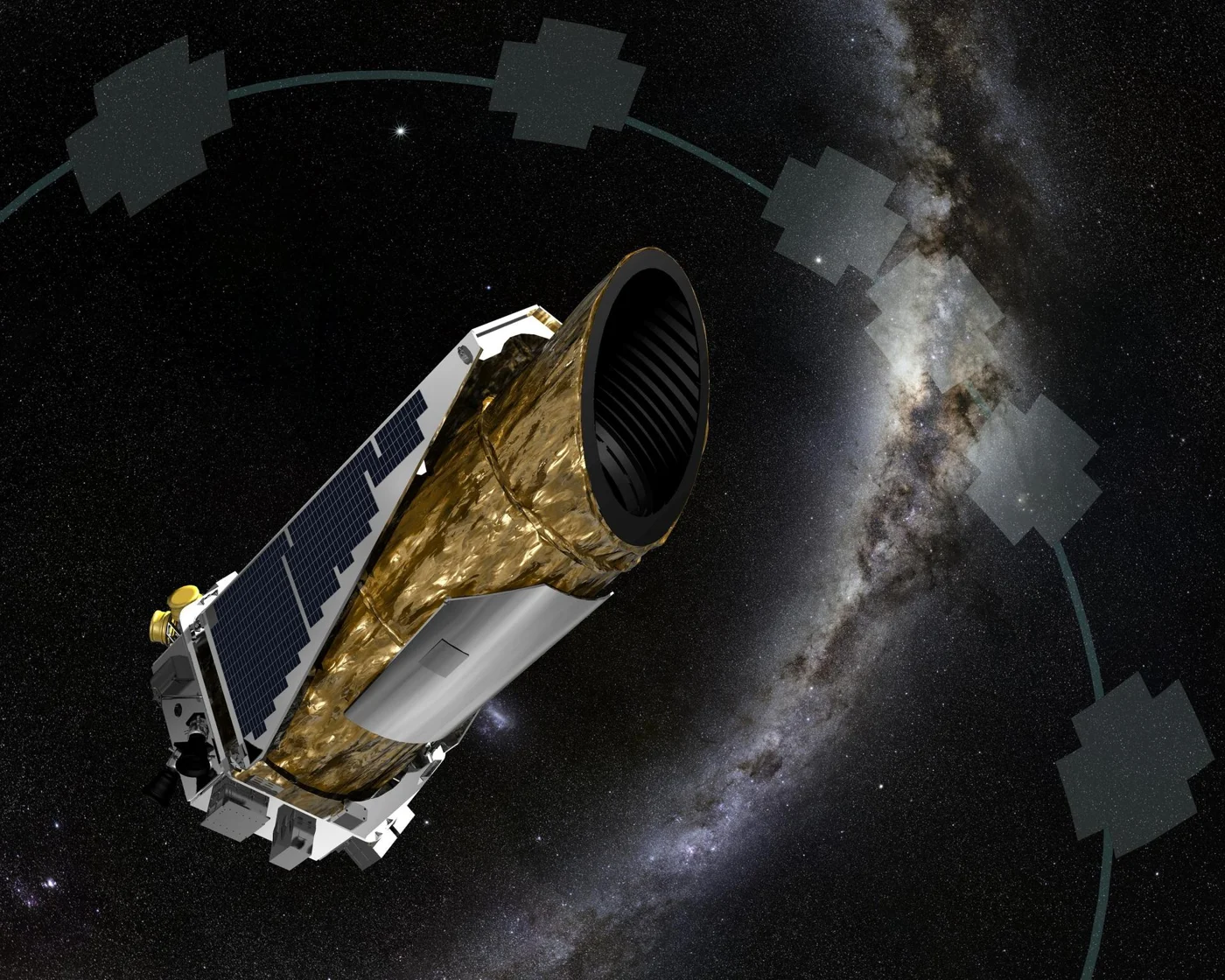
NASA’s 2017 announcement about Kepler-90i documented a neural-network-assisted discovery from archived Kepler measurements. Researchers trained that system on 15,000 previously vetted signals and searched weaker patterns in systems already known to contain planets.
The current account describes a different role for AI: helping individuals compare methods, build pipelines and examine archives. That could broaden participation in computational research, but it should not be marketed as the first time machine learning has helped find an exoplanet.
Readers should also separate vendor reporting from independently published scientific results. OpenAI supplies the current project narrative and candidate counts. This article has not reproduced those searches, assessed their code or independently verified their false-positive rates. The useful claim is that there are leads to investigate, not that their eventual outcome is already settled.
How to participate without buying a telescope
NASA’s Exoplanet Watch contribution guide offers a more structured entry point. Participants can request observations from remote telescopes rather than own a telescope. The guide explains how to turn images into a light curve with EXOTIC and submit results through the American Association of Variable Star Observers.
That is primarily a route into useful observations and analysis, not a guarantee of finding a new planet. Start by understanding a known target, preserving the observation metadata and checking whether your result can be reproduced. Only then consider expanding the search or automating additional steps.
The same evidence distinction applies across AI-assisted science. Our protein-design results explainer separates an experimental result from the wider conclusions people may be tempted to draw. In astronomy, the corresponding boundary is straightforward: a candidate gives researchers a testable question; confirmation requires evidence that survives the alternatives.