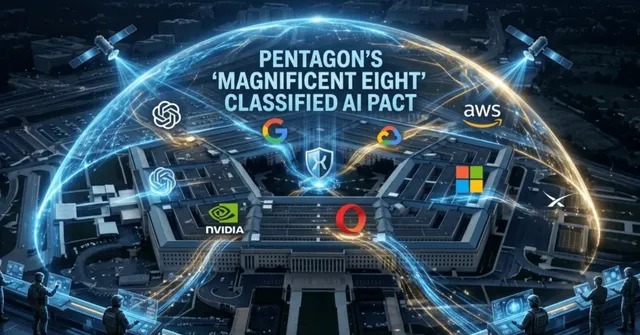
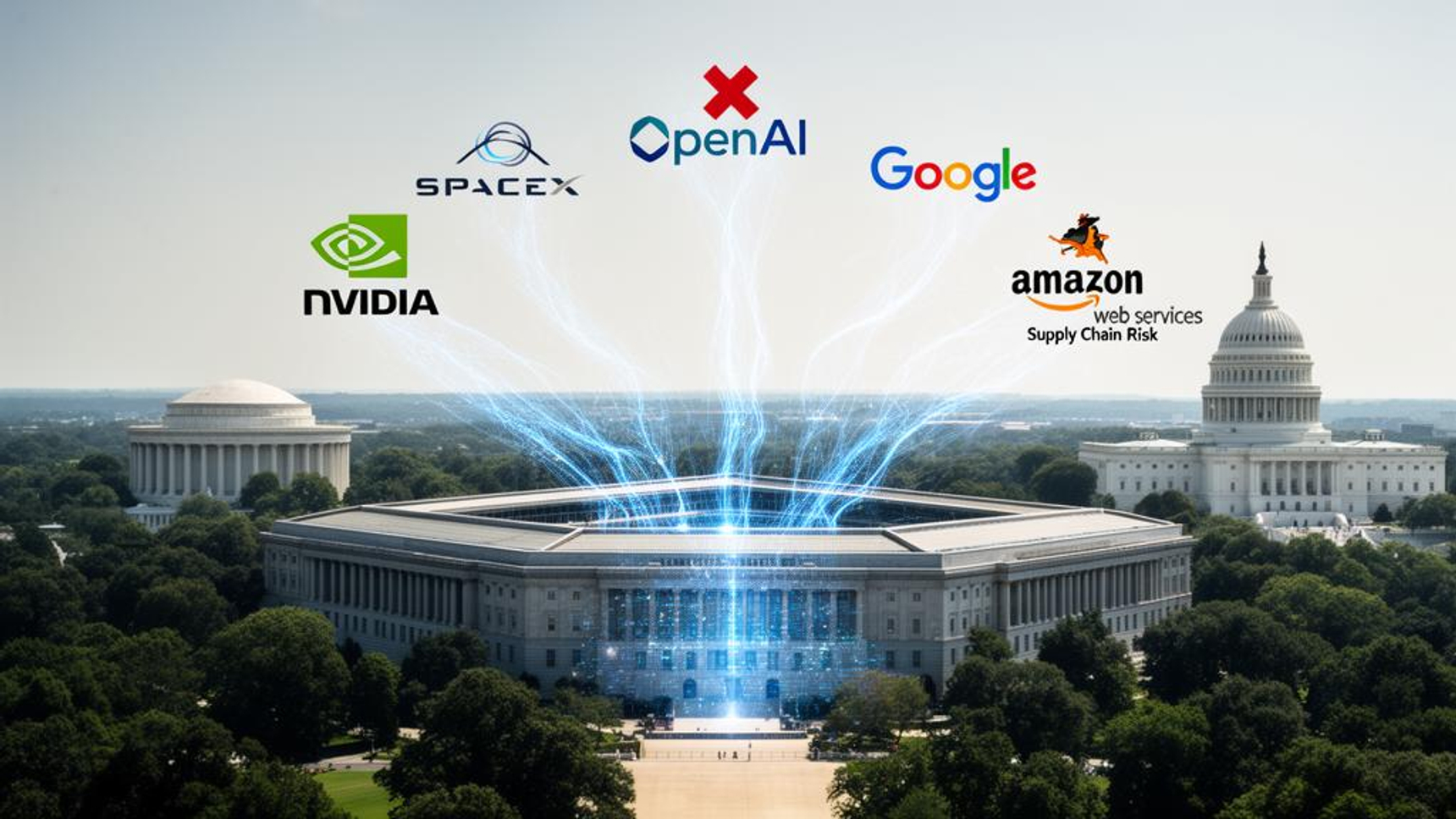
The Pentagon has announced a significant stride in its push for an AI-first military, striking deals with seven major technology firms to integrate advanced artificial intelligence capabilities onto its classified networks. This move, aimed at accelerating the military’s adoption of AI, includes collaborations with industry giants such as SpaceX, OpenAI, Google, NVIDIA, Microsoft, Amazon Web Services, and Reflection, with Oracle also joining the initiative.
Pentagon AI Deals: A New Era of Military AI Integration
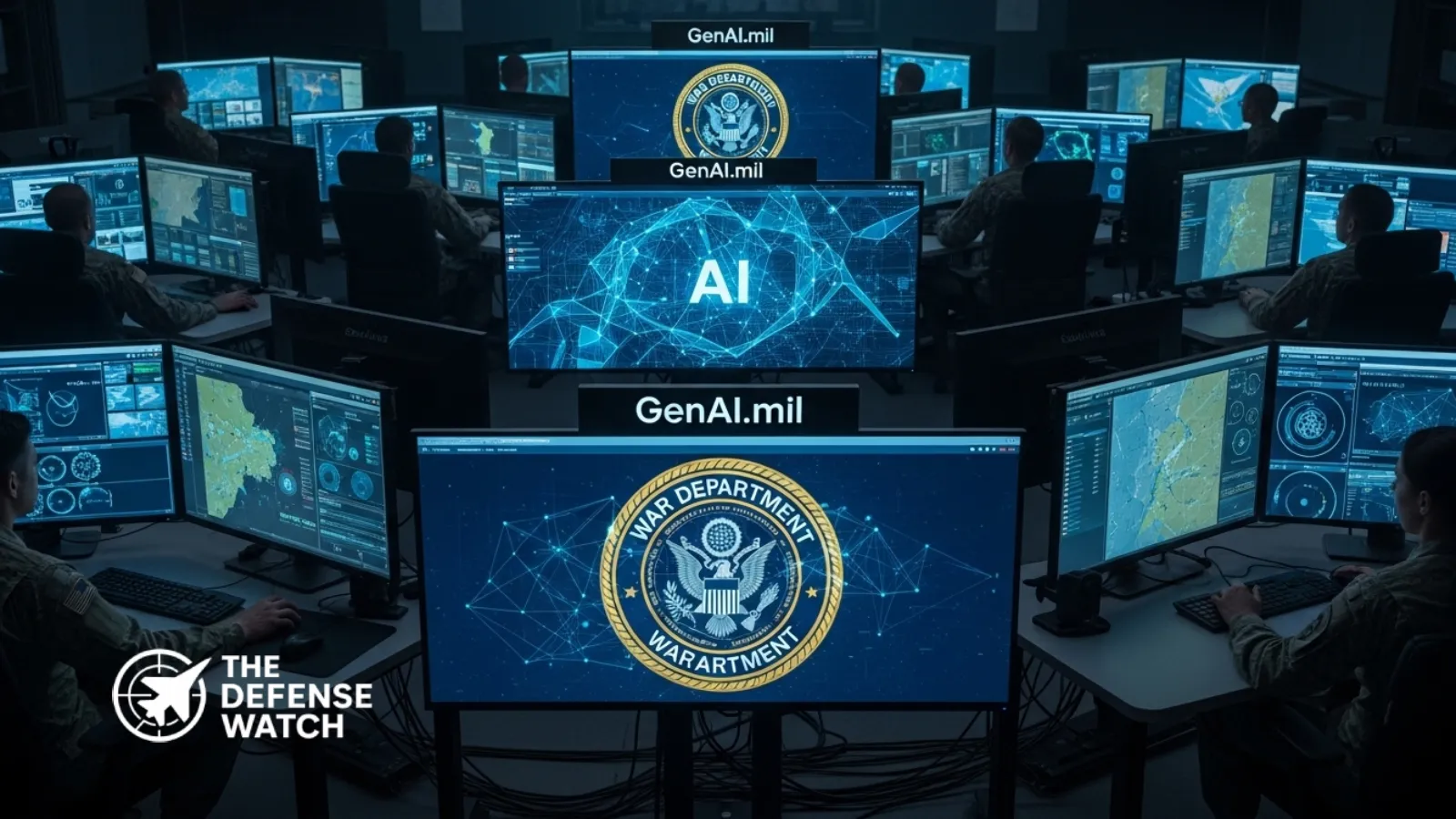
These **Pentagon AI deals** mark a pivotal moment in national security, as the Department of Defense (DoD) seeks to enhance its warfighting, intelligence, and enterprise operations. The integrated AI capabilities will streamline data synthesis, elevate situational understanding, and augment warfighter decision-making in complex operational environments. This initiative is a direct outcome of Defense Secretary Pete Hegseth’s ongoing efforts to bring commercial AI innovation into the DoD, following the launch of the GenAI.mil platform in December.
Key Players in the Pentagon AI Initiative
The collaboration involves a formidable lineup of tech leaders: SpaceX, OpenAI, Google, NVIDIA, Microsoft, Amazon Web Services, and Reflection. Oracle has also joined this elite group, bringing the total to eight companies. These firms will deploy their AI capabilities within the department’s Impact Level 6 (IL6) and Impact Level 7 (IL7) network environments. IL6 is designated for information classified up to the secret level, while IL7 supports highly restricted data, underscoring the sensitive nature of this integration.
GenAI.mil and the Future of Military AI
Andrew Mapes, the acting principal deputy chief digital and AI officer, highlighted the department’s plans to continuously modernize GenAI.mil. While the initial rollout featured Google’s Gemini model for sensitive but unclassified data, the department intends to introduce additional models across all classification levels. This expansion aims to make these powerful AI tools accessible to warfighters, civilians, and contractors alike, provided they possess a Common Access Card. The goal is to prevent AI vendor lock and ensure long-term flexibility for the Joint Force.
The Anthropic Exclusion: A Point of Contention in Pentagon AI Deals
Notably absent from these agreements is Anthropic, the first AI company to deploy its models on the Pentagon’s classified systems. Defense Secretary Pete Hegseth previously designated Anthropic as a “supply chain risk” following a dispute over the military’s use of the firm’s AI models. This status is typically reserved for foreign companies posing national security risks. Despite Anthropic’s tools being widely regarded as superior, the department emphasized that the new agreements ensure the deployment of AI capabilities for “lawful operational use,” a standard that was central to the dispute with Anthropic. Emil Michael, the DoD’s under secretary for research and engineering, reiterated that Anthropic remains a supply chain risk, with plans to phase out its products within six months.
Impact and Future Implications of DoD’s AI Strategy
The DoD’s aggressive pursuit of AI integration is set to transform military operations, offering unprecedented capabilities in data analysis, situational awareness, and decision-making. By partnering with a diverse suite of AI providers, the Pentagon aims to safeguard the nation against evolving threats and maintain a technological edge. This strategic shift underscores a commitment to leveraging cutting-edge AI to create an “AI-first fighting force.” For more insights into the broader implications of AI in defense, you can read about [Microsoft’s MAI Models: A New Era of AI Independence and Innovation][1].
While the immediate benefits are clear, the long-term implications of deploying such advanced AI on classified networks will be closely watched. The department’s focus on preventing vendor lock and ensuring flexibility suggests a forward-thinking approach to managing this rapidly evolving technological landscape. The integration of these powerful AI tools is expected to roll out on classified networks in the coming months, promising a significant upgrade to the military’s operational capabilities.
**References**
[1] Microsoft’s MAI Models: A New Era of AI Independence and Innovation: https://idigitalnews.com/tech-companies/microsofts-mai-models-a-new-era-of-ai-independence-and-innovation.html
[2] DoD strikes deals with major tech firms to deploy AI on classified networks: https://federalnewsnetwork.com/defense-news/2026/05/dod-strikes-deals-with-major-tech-firms-to-deploy-ai-on-classified-networks/