





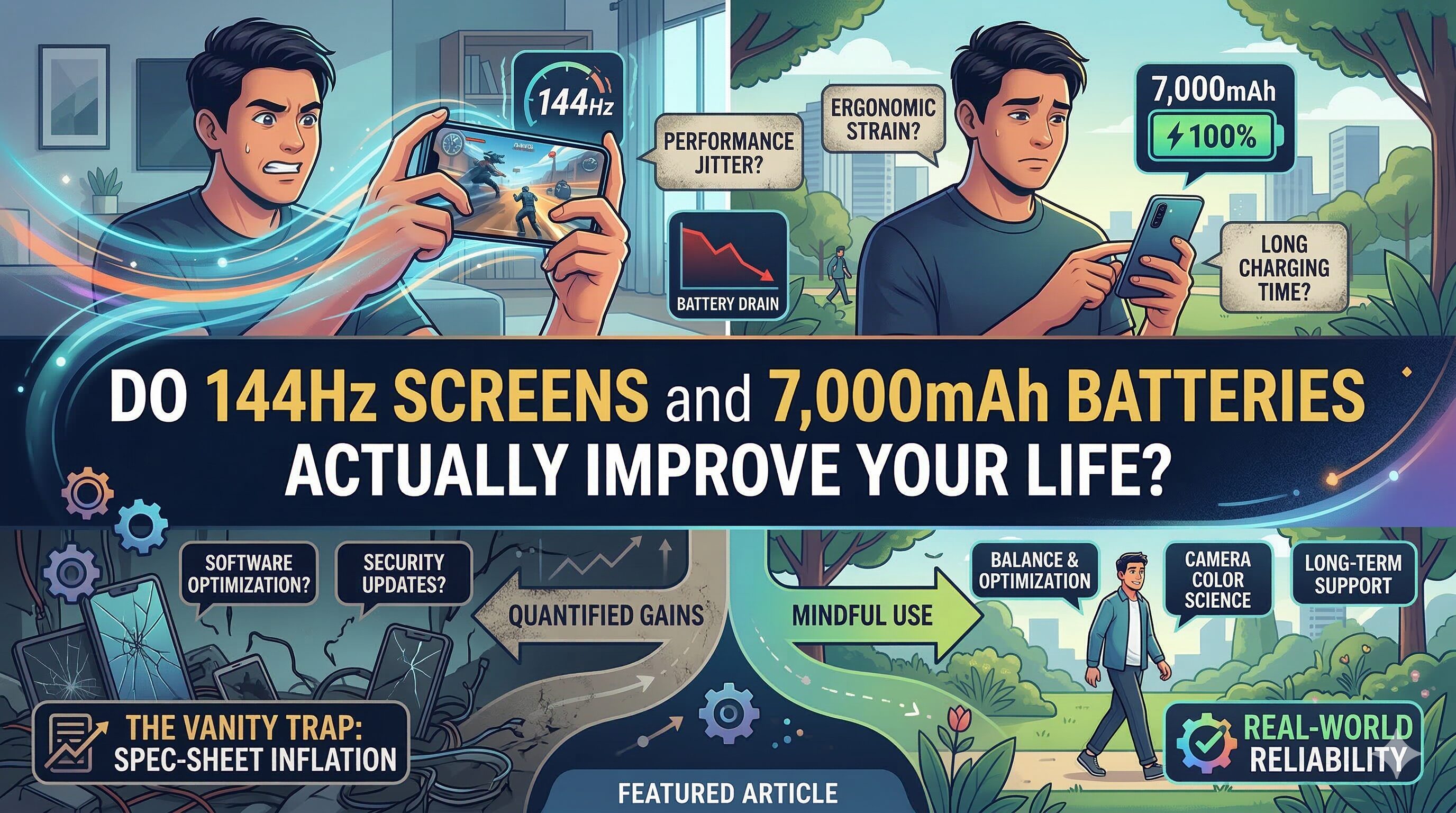
Walk into any mobile shop today, and you’ll see a familiar pattern. Budget smartphones are no longer just ‘good enough’; they are boasting numbers that seem to defy logic: 144Hz refresh rates, 7,000mAh batteries, and megapixels by the dozen. But while these numbers look stellar on a spec sheet, the reality of the user experience is often far more nuanced.
The Rise of ‘Spec-Sheet Inflation’
We are witnessing a shift where manufacturers are competing in a saturated market by focusing on ‘vanity metrics.’ The goal isn’t just to build a functional device; it’s to build a device that wins the spec-sheet comparison in a five-second scroll.
- The 144Hz Trap: A high refresh rate is fantastic for gaming flagships, but when applied to a budget chipset, it can often lead to jittery performance and accelerated battery drain.
- The 7,000mAh Gamble: More battery is generally better, but at what cost to ergonomics and charging time? Are we sacrificing the slimness and portability that made mobile devices ‘mobile’ in the first place?
The Missing User Experience
The problem with this ‘Spec-Sheet Inflation’ is that it distracts from the core pillars of mobile reliability: software optimization, camera color science, and long-term security support. A 144Hz screen looks smooth for a few seconds, but a phone that stops receiving security updates after a year is a liability.
The Verdict: What Do You Really Need?
The most successful budget devices of 2026 won’t be the ones with the largest batteries or the highest refresh rates; they will be the ones that achieve a balance. As consumers, it’s time to stop chasing vanity numbers and start asking for real-world reliability. Before your next upgrade, ask yourself: are you buying a phone, or just a spec sheet?