**NASA’s Artemis II Mission Revolutionizes Lunar Communication with Laser Technology**
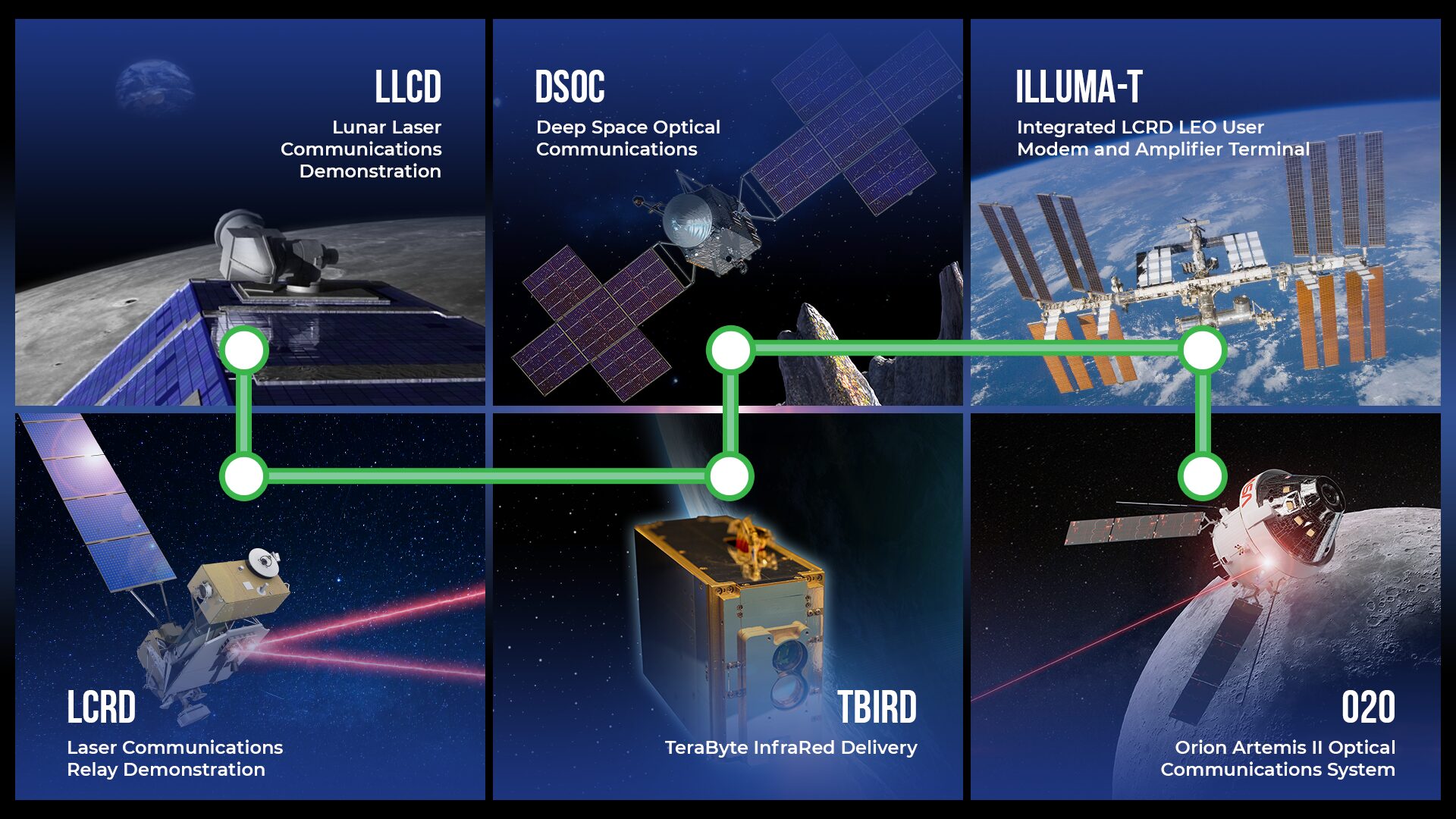
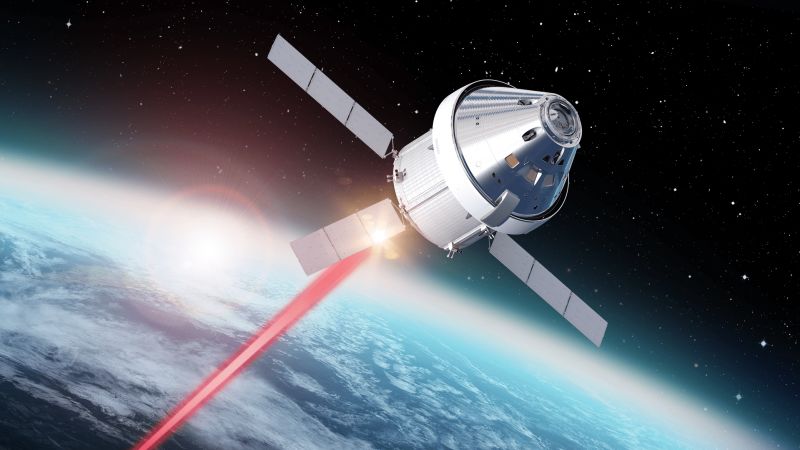
As NASA’s Artemis II mission embarks on its historic journey around the Moon, a groundbreaking laser-based communication system, the Orion Artemis II Optical Communications System (O2O), is set to redefine how we connect with deep space missions. This innovative technology promises to deliver unprecedented data rates, including stunning 4K video, back to Earth, marking a significant leap forward from traditional radio frequency systems.
## The Dawn of Optical Communication in Deep Space
For decades, space communication has relied on microwave frequencies. While reliable, these systems have limitations in bandwidth, especially for the ever-increasing data demands of modern space exploration. The O2O system, a culmination of over two decades of research by NASA and MIT Lincoln Laboratory, leverages bursts of infrared light to encode and transmit data, offering a significantly higher capacity.
### How O2O Works: A Technical Marvel
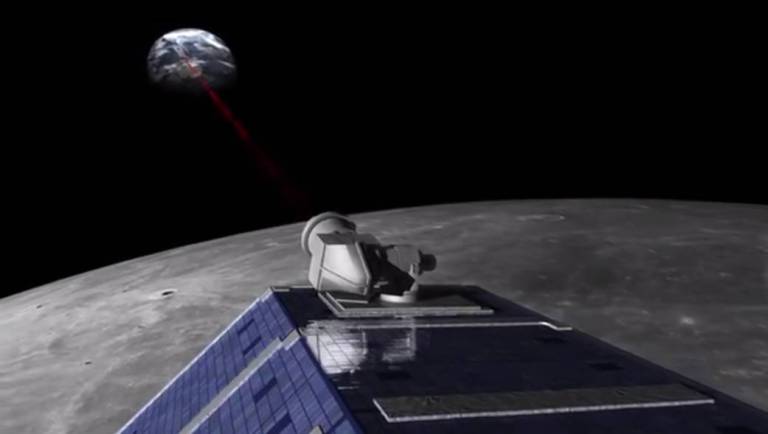
At the heart of the O2O system is a 10-centimeter telescope mounted on a two-axis gimbal, capable of precisely aiming a laser beam across vast distances. This system is designed to achieve data rates of up to 260 megabits per second (Mbps) for downlink to Earth and 20 Mbps for uplink to Orion. To put this into perspective, this is comparable to a high-speed home internet connection.
Despite the immense distance of 384,400 kilometers to the Moon, where the laser beam expands to about 6 kilometers in diameter, the O2O system maintains remarkable accuracy. This precision is crucial for hitting ground stations in New Mexico and California, chosen for their dry air and minimal cloud coverage, which are optimal for optical communication.
## Bridging the Distance: Benefits for Future Missions
The implications of the O2O system extend far beyond Artemis II. The ability to transmit high-resolution video and large volumes of scientific data in near real-time will transform lunar exploration. It will enable more effective two-way communication between astronauts and mission control, crucial for stressful situations and continuous human presence on and around the Moon.
Furthermore, an enhanced information pipeline means scientists on Earth can receive critical mission data from flight recorders without waiting for the spacecraft’s return. In the future, this continuous connectivity could facilitate remote piloting of lunar rovers and monitoring of vital lunar infrastructure, paving the way for sustained lunar operations.
## Optical vs. Radio Communication: A Comparison
| Feature | Optical Communication (O2O) | Radio Frequency Communication |
| :—————— | :————————– | :—————————- |
| **Data Rate** | Up to 260 Mbps (downlink) | Significantly lower |
| **Technology** | Infrared laser light | Microwave frequencies |
| **Bandwidth** | High | Lower |
| **Equipment Size** | Smaller, lighter | Larger, heavier |
| **Beam Divergence** | Narrower | Wider |
| **Latency** | ~1 second round-trip | Higher |
## Conclusion
The O2O system on Artemis II is not just a technological demonstration; it’s a critical step towards the future of deep space communication. By enabling faster, more efficient, and more robust data transfer, it will empower future lunar and Martian missions, bringing us closer to understanding and exploring our solar system like never before. The stunning 4K video beamed back from Orion will undoubtedly captivate the public and inspire a new generation of space enthusiasts.
**References**
* [1] Scientific American. “NASA’s Artemis II laser communications system is beaming 4K video from the moon.” [https://www.scientificamerican.com/article/nasas-artemis-ii-laser-communications-system-is-beaming-4k-video-from-the/](https://www.scientificamerican.com/article/nasas-artemis-ii-laser-communications-system-is-beaming-4k-video-from-the/)
* [2] NASA. “NASA Laser Communications Terminal Delivered for Artemis II.” [https://www.nasa.gov/feature/goddard/2023/nasa-laser-communications-terminal-delivered-for-artemis-ii/](https://www.nasa.gov/feature/goddard/2023/nasa-laser-communications-terminal-delivered-for-artemis-ii/)