




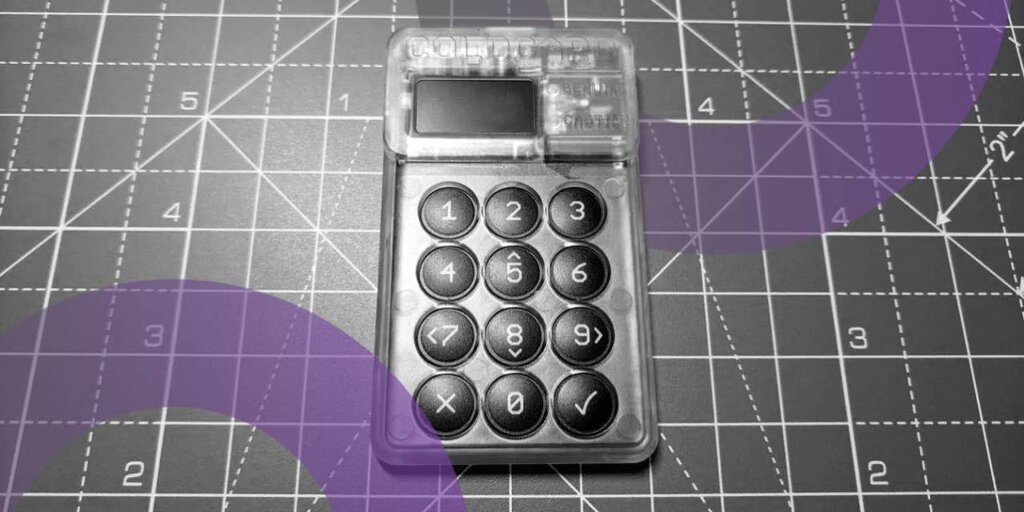
An air-gapped Bitcoin wallet is designed to keep private keys away from the internet, but the recent Coldcard exploit shows why offline storage should be treated as a strong defense layer rather than a magic shield.
Decrypt’s explainer breaks down the issue after losses tied to affected Coldcard wallets climbed past $114 million. The incident is troubling because air-gapped wallets are often recommended to serious self-custody users precisely because they avoid direct network exposure. In this case, the weakness was not a Wi-Fi connection or a phishing website. It was the quality of the seed generation process.
What an air-gapped wallet actually protects
A crypto wallet does not store coins in the same way a leather wallet stores cash. It stores keys. The public key lets others send funds to an address, while the private key authorizes movement of those funds. Whoever controls the private key controls the coins.
An air-gapped Bitcoin wallet tries to keep that private key physically separated from online networks. Some devices use QR codes. Others use microSD cards. The point is to sign transactions offline and pass only the necessary transaction data between the wallet and an internet-connected device.
That design reduces exposure to malware, browser attacks, remote exploits, and compromised computers. If the wallet never connects to the internet, an attacker cannot simply reach it over the network. For many users, that is a major improvement over storing funds in a browser extension, mobile wallet, or exchange account.
Why the Coldcard case is different
The Coldcard incident shows that isolation does not solve every problem. According to Decrypt, Coinkite disclosed that a March 2021 firmware build error caused some Coldcard devices to generate seed phrases from a much smaller pool of possible values than intended.
That kind of flaw is severe because the seed phrase is the root secret. If the random number generation is weak, attackers may be able to guess the seed by searching a smaller key space. The device can remain offline the entire time, yet the funds can still be stolen once the attacker discovers the private key.
This is why randomness is not a boring technical detail. A wallet can have strong materials, careful physical design, offline signing, and a respected brand, but if the seed was created from weak entropy, the rest of the system is built on a compromised foundation.
Air-gapped does not mean maintenance-free
Self-custody always involves operational responsibility. Users must protect their recovery phrase, verify addresses before signing, keep devices physically secure, and understand what firmware updates can and cannot fix. Updating firmware may prevent future weak seeds, but it cannot retroactively strengthen a seed phrase that was already generated badly.
For affected users, the safer response is usually to generate a completely new wallet on a trusted setup, confirm the backup, test a small transaction, and then move funds. Simply importing the old seed into another device preserves the same root secret and does not remove the weakness.
Timing also matters. Once a vulnerability becomes public, attackers and defenders are effectively searching the same landscape. A user who waits for perfect certainty may give automated tools more time to identify exposed addresses and drain remaining balances.
Additional protections can reduce single points of failure. A strong passphrase, multisignature setup, or split custody model can make one compromised device or one weak seed less catastrophic. But each added layer also increases complexity, and complexity creates its own risk if the user does not understand the recovery process.
The lesson for Bitcoin holders
The lesson is not to abandon hardware wallets. A well-designed hardware wallet remains far safer than leaving serious holdings on a phone, browser extension, or exchange account. The lesson is to understand exactly what risk each tool reduces.
An air-gapped Bitcoin wallet reduces network attack risk. It does not guarantee perfect firmware, perfect manufacturing, perfect random number generation, or perfect user behavior. Those are separate layers in the custody stack, and any one of them can become the weak point.
For ordinary users, the practical advice is measured. Keep wallet firmware current, follow manufacturer advisories, never expose recovery phrases digitally, verify every transaction, and avoid keeping all funds behind one secret. Cold storage is still powerful, but the Coldcard exploit proves that Bitcoin security depends on more than whether a device ever touches the internet.
Source: Decrypt