Workbrew 2.0: What Mac Admins Should Inventory First

Summary
Workbrew 2.0 expands the company’s Mac software inventory beyond Homebrew to include npm packages, VS Code extensions and macOS apps. The practical question for administrators is not simply whether another dashboard finds more software. It is whether the inventory reveals installations their existing process misses, assigns a clear owner and produces evidence that an update actually happened. As reviewed November 22, 2026, the release also includes a native Workbrew app on every plan.
What Workbrew 2.0 adds to the inventory
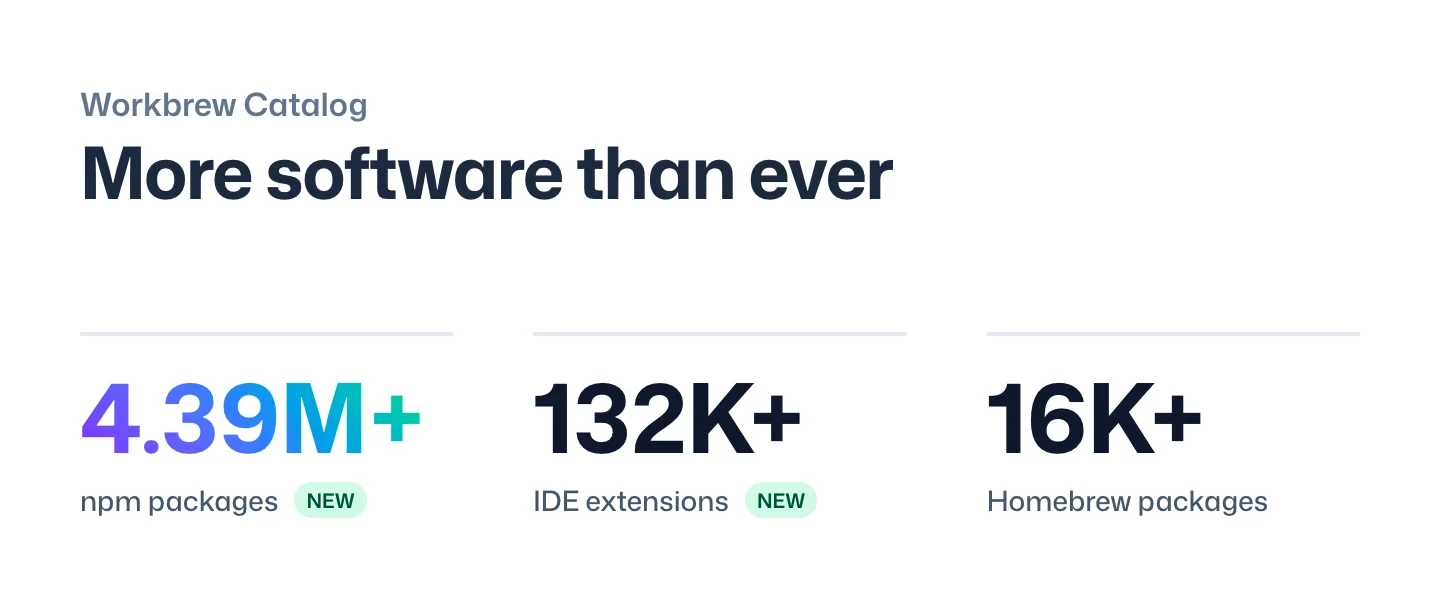
The company’s official release announcement says the expanded catalog presents the supported software sources in one inventory with known vulnerabilities flagged. That extends its original role as a management layer for Homebrew. The distinction matters because installing a conventional Mac application is not the only way software reaches an endpoint. A developer may use a package manager, while an analyst experimenting with scripts may install tools without thinking of themselves as a developer. Inventorying those routes is a different job from listing only applications deployed by IT.
An employee app is an approval path, not just a catalog

Workbrew describes its native Mac app as a way to find, install, update and request approved software. Employees can use that interface rather than opening Terminal. The company also says the Updatest team has joined Workbrew. Those are product announcements, not evidence that every organization will have a smooth migration. The useful evaluation question is how a request moves from employee to approver, what explanation accompanies a refusal and who handles an urgent exception. A technically complete catalog can still fail if users cannot understand the sanctioned route.
Keep device management in the design
Workbrew’s product overview positions it alongside MDM and code scanners, rather than replacing them. MDM manages devices; code scanning examines software being shipped; this product focuses on software installed by employees. That is the vendor’s positioning, not a claim that all MDM products lack package visibility. Before a pilot, write down what the current stack already collects and which policies it enforces. Otherwise a team risks purchasing duplicate reporting while leaving the ownership gap unresolved. The Apple @ Work coverage also frames the release as a complementary layer; that column includes a sponsorship disclosure.
A small pilot can answer four concrete questions
Use a limited, authorized group of Macs representing the actual workflows you need to manage. A suggested pilot might include a developer workstation, an analyst’s script-heavy Mac and a general office device. This is an evaluation proposal, not a test conducted by iDigitalNews. First compare detected software against a manually checked sample. Second, verify whether the reported package version corresponds to the copy the user actually runs. Third, submit an approved software request and confirm the responsible person receives it. Fourth, update a noncritical tool and verify the version on the endpoint as well as in the console. Record missed items and reporting delays instead of reducing the result to a single detection count.
Treat vulnerability counts as the beginning of triage
A flagged known vulnerability needs context: the installed version, affected component, exposure and available remedy. A large finding count does not itself prove an active compromise. Equally, an empty dashboard does not prove that every dependency or extension is safe. Workbrew says it has patched more than ten million vulnerabilities since launch and is ISO/IEC 27001:2022 certified. Those are vendor statements, not independently reproduced performance results. This article does not use them to estimate time saved or risk eliminated. For a related example of separating a vendor result from broad conclusions, see our analysis of OpenAI’s distillation-defense test.
Choose the plan after defining the evidence you need
The official release says the Workbrew app is available on every plan and that Team provides a free starting point. It also introduces Workbrew MSP with separate customer workspaces, team access and consolidated billing. Availability of the app does not establish that every governance, reporting or security feature is included in the free tier. Check the current plan terms against the pilot requirements before committing. A good outcome is a short list of previously unseen installations, a functioning approval route and verifiable update results. That evidence is more useful than a broad claim that adding a software inventory automatically secures the fleet.
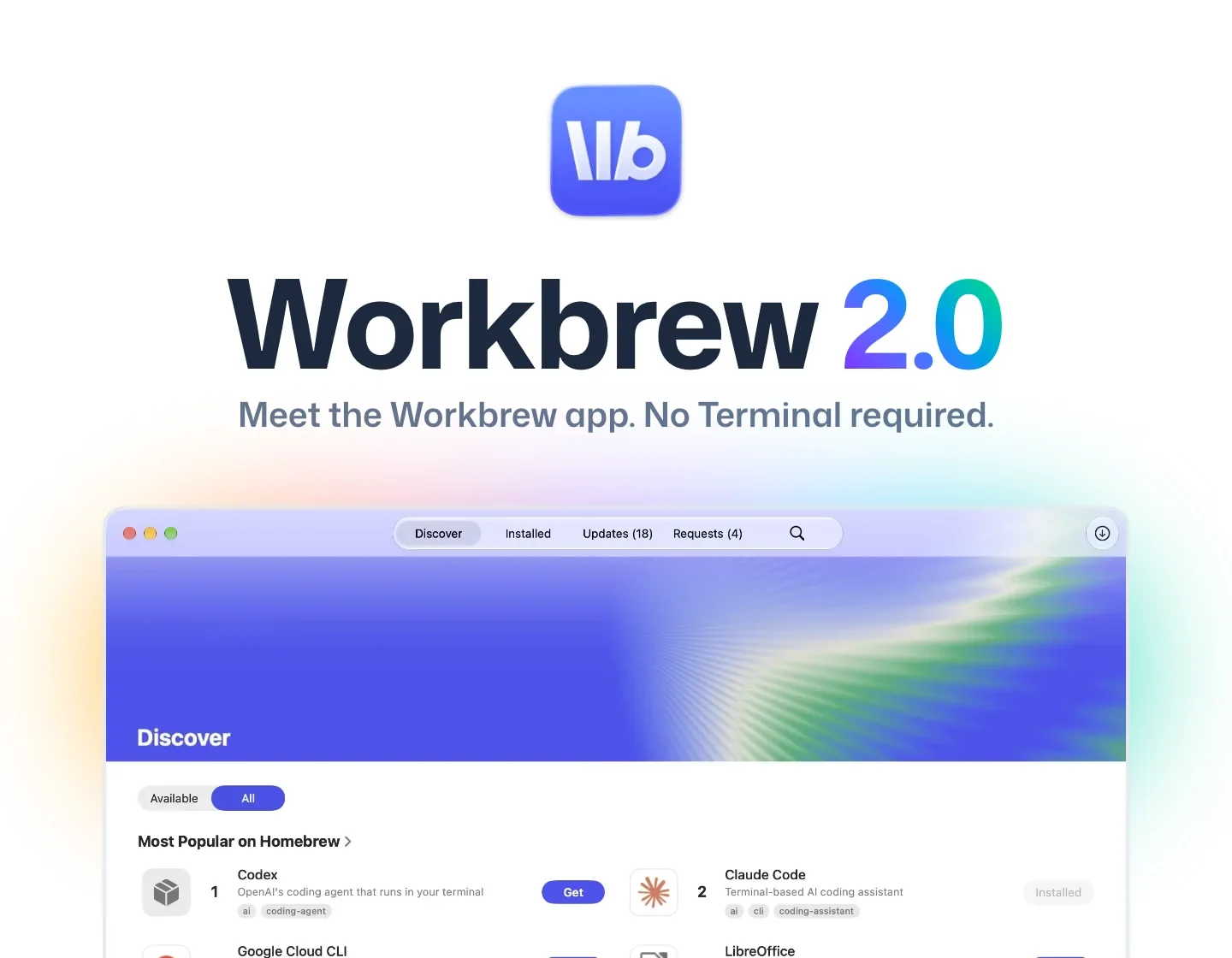
Featured product interface image: Workbrew, from its official release announcement.