


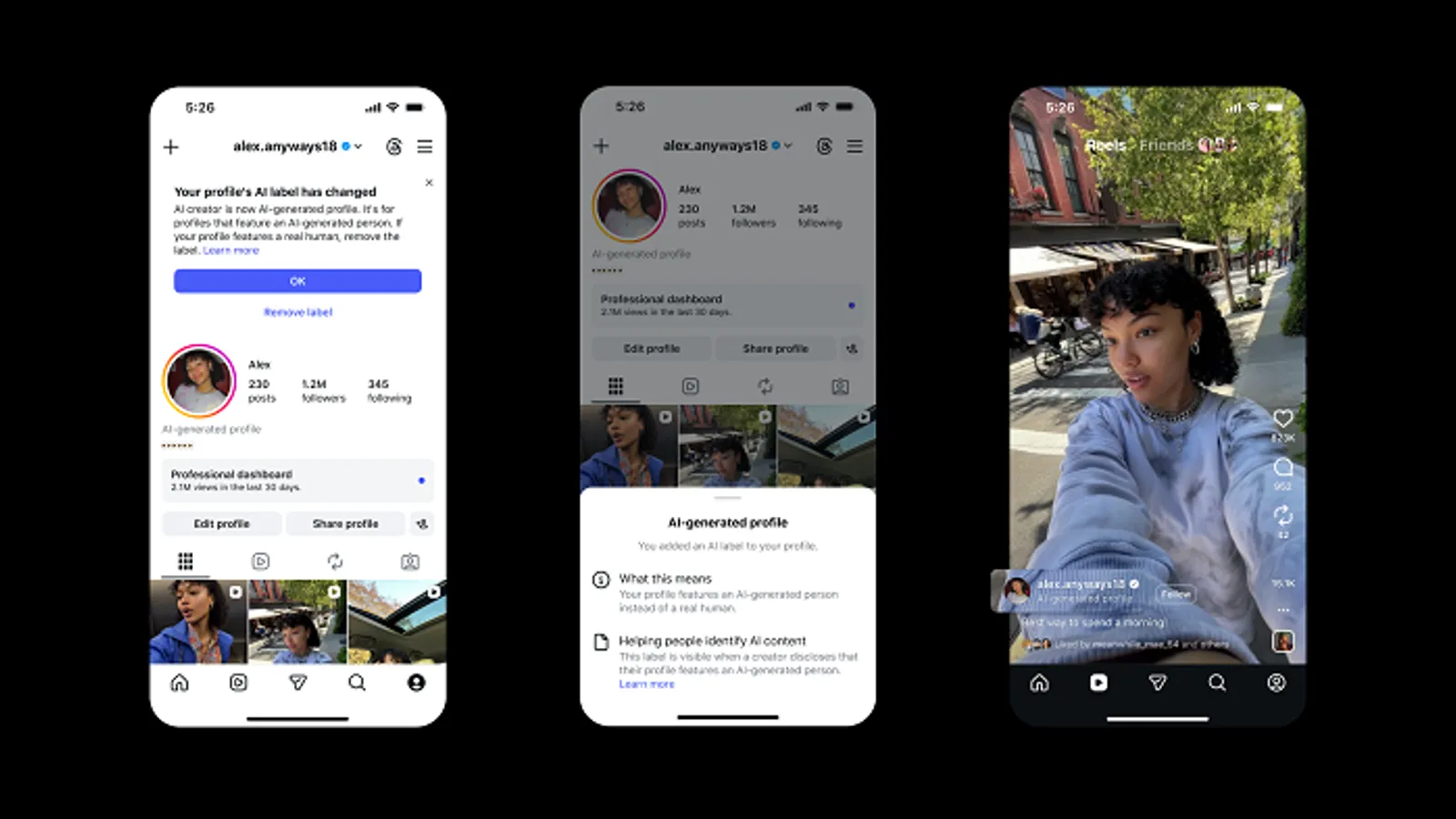
Instagram AI profile labels are being revised as Meta tries to make artificial intelligence accounts easier to identify. According to Social Media Today, Instagram is renaming its “AI creator” account labels to “AI generated profile,” a clearer phrase meant to tell users when a profile features an artificial intelligence-generated person rather than a human creator.
The update may look small, but it touches one of the most sensitive questions facing social platforms in 2026: should users have to guess whether the account they are viewing belongs to a real person, a brand, a creator, or a generated character? Instagram’s answer is moving toward stronger disclosure.
What Instagram is changing
The label change replaces a softer phrase with one that is harder to misunderstand. “AI creator” could imply a person who uses AI tools. “AI generated profile” more directly signals that the profile itself features generated identity elements. That distinction matters because many users are comfortable with creators using AI in editing or production, but less comfortable when a profile appears human and later turns out to be synthetic.
Instagram is also adding explanatory language that images posted by the account may feature AI-generated characters. This gives users more context before they follow, message, or interact with a profile. The platform is trying to reduce confusion around accounts that use realistic AI faces, fictional personas, or generated lifestyle content.
Meta is also applying distribution pressure. Social Media Today reports that Instagram will limit the reach of profiles featuring an AI-generated person if they do not add the label. That turns disclosure into more than a voluntary transparency measure. Accounts that hide the nature of the profile may lose visibility.
Why AI identity is becoming a platform problem
Social media was built around the assumption that users were interacting with other people, organizations, celebrities, creators, or communities. Generative AI complicates that assumption. A profile can now look personal, post regularly, reply in a human tone, and build a following while having no real person behind the identity shown on screen.
That creates practical trust issues. Users may make emotional, financial, political, or purchasing decisions based on a perceived relationship with an account. If the account is powered by AI, the user deserves to know that before investing attention or trust. The problem is sharper when generated characters use realistic faces, personal stories, or influencer-style content.
For platforms, undisclosed AI personas can also damage the quality of feeds. If users feel that comments, profiles, and recommendations are crowded with synthetic engagement, the social value of the app weakens. More AI output does not automatically mean more meaningful interaction.
Meta is adjusting its AI strategy in public
The move also shows Meta refining its broader AI push. The company has spent heavily on AI assistants, image tools, and creator features, but social apps face a different challenge from productivity software. People may welcome AI help when editing a photo or drafting text. They are less welcoming when AI accounts appear to imitate human presence without clear disclosure.
Instagram’s new wording suggests Meta understands that distinction. Instead of presenting all AI participation as creativity, the platform is separating human-led use of AI from accounts that feature AI-generated people. That could become an important policy line as AI content becomes cheaper and more convincing.
There is also a regulatory angle. Governments are already examining platform design, recommendation systems, child safety, and synthetic media. Clear labeling gives Meta a visible way to show that it is responding before stronger rules arrive. If regulators push for mandatory AI disclosures, Instagram will be able to point to an existing framework.
What users and creators should watch
For everyday users, the change should make AI personas easier to spot. It will not remove AI content from Instagram, but it gives users a better signal before they engage. For creators and brands, the message is clear: if a profile is built around an AI-generated person, disclosure is becoming part of normal account hygiene.
The harder question is enforcement. Meta will need to identify accounts that use generated people without relying only on self-reporting. That may require automated detection, user reports, metadata analysis, and review systems. Any enforcement system will have edge cases, especially for avatars, virtual influencers, parody accounts, and heavily edited images.
Still, the direction is useful. Instagram AI profile labels make the platform’s social contract clearer: users can interact with AI-generated characters, but they should not be tricked into thinking those characters are human. In a feed increasingly shaped by synthetic media, that clarity is no longer optional.
Source: Social Media Today