




Summary
Canva restructuring will affect 1,271 people, or 22 percent of its workforce, through a combination of role changes, relocation requests and layoffs. That distinction is central to understanding the announcement: the number of employees affected is not a confirmed count of employees losing their jobs.
What the Canva restructuring announcement actually says
The Verge and Nine reported the changes after co-founder and chief executive Melanie Perkins addressed staff. According to their accounts, the company wants smaller teams with more responsibility and a simpler organization. Perkins described the aim as returning to the kind of empowered teams associated with Canva’s earlier years.
The reports make clear that outcomes will differ by employee. Some people may move to a different role, some may be asked to relocate, and others will leave. Neither report establishes a separate final tally for each of those groups. Headlines describing all 1,271 affected positions as confirmed layoffs therefore go further than the available detail supports.
The human impact is nonetheless substantial. A role change or relocation request can alter someone’s working life even without an immediate job loss. The affected-workforce figure is useful for measuring the reach of the reorganization, but it should not erase the differences between those outcomes.
Product teams merge as Sydney becomes more central
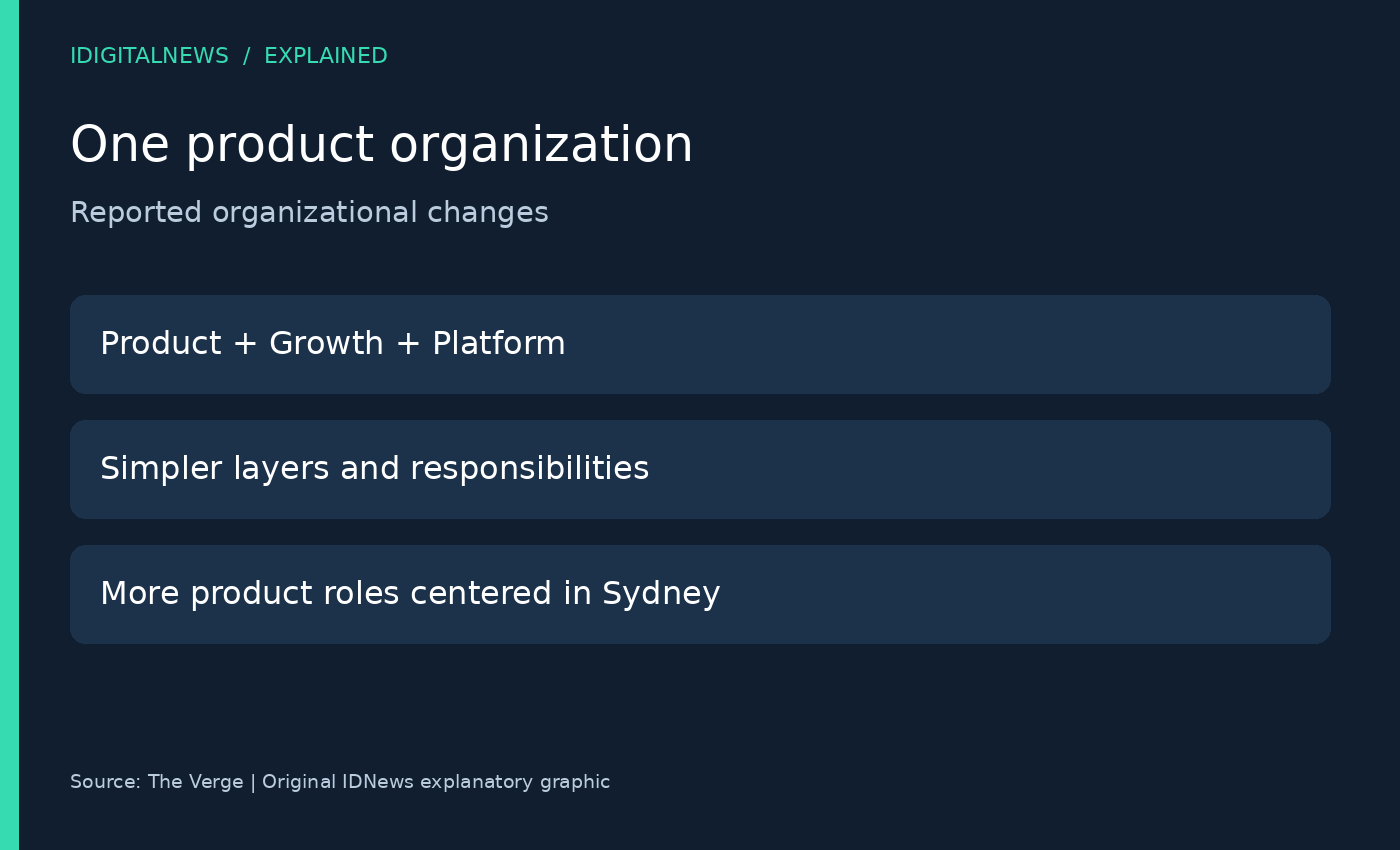
According to The Verge’s account of the staff note, Canva will combine its Product, Growth and Platform teams into one product organization. The changes also involve simplifying management layers and consolidating responsibilities that overlap. Sydney will become the primary home for more product teams and other roles where Canva considers shared context and close collaboration especially important.
This is an organizational change, not an announced withdrawal of Canva’s design service. Bringing teams together may reduce the number of internal handoffs, but that is an interpretation of the structure rather than a measured productivity result. Whether customers see faster releases or better reliability will have to be judged after implementation.
The same report says most hybrid employees will be expected to spend two to three days a week in an office from January, depending on their area. That wording does not establish a universal five-day office requirement, nor does it specify identical arrangements for every team or country.
What departing employees are being offered
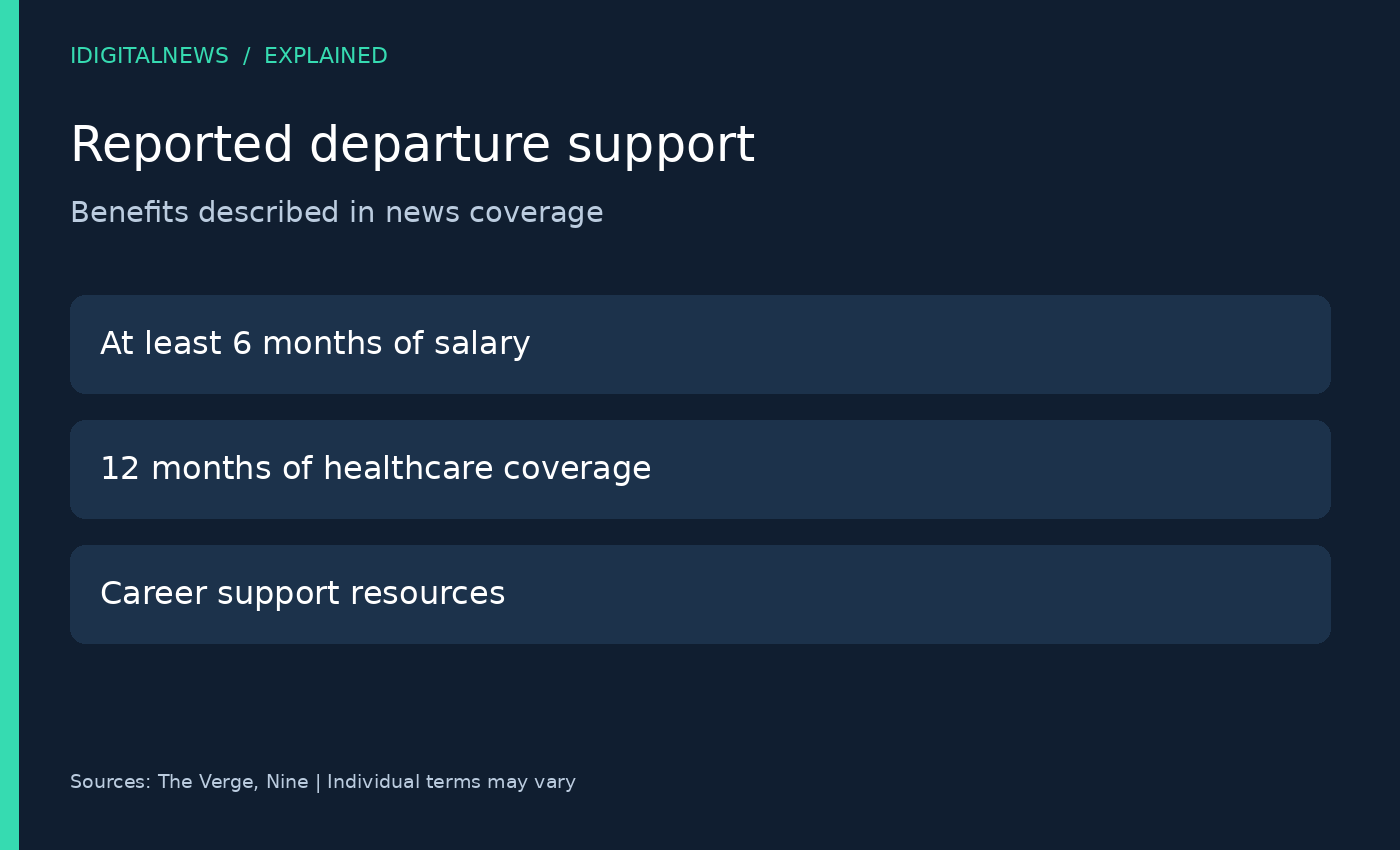
Both publications report at least six months of salary and twelve months of healthcare coverage for employees leaving the company, alongside career support. Nine also reports that departing employees can keep their laptops and receive access to support including a year of LinkedIn Premium.
Nine describes an additional fund offering US$10,000 grants to departing team members who want to start a business or local community initiative. That is a reported support program, not evidence that every departing employee will automatically receive a grant. Eligibility and application details should come from the company’s communications to affected staff.
The reported benefits provide useful context, but they do not settle individual employment questions. Local contracts, healthcare arrangements and the nature of a person’s departure can matter. Employees should rely on their own official documentation rather than treating a general news summary as a complete statement of their entitlements.
What customers and the wider industry should watch
The verified reports describe workforce and organizational changes. They do not announce the closure of Canva, cancellation of customer accounts or a new subscription price. Users should avoid treating the restructure as proof that any of those events is happening. Equally, a reorganization alone does not demonstrate that product quality will improve.
For business users, the practical questions are whether support remains responsive, whether planned features ship reliably and whether collaboration tools continue working as expected. Those are outcomes that can be observed over time. They are more meaningful than assuming that a smaller organizational chart must produce either better or worse software.
There is also no basis in these reports to assign every affected role to replacement by AI. The announcement comes amid broad changes in software, but timing is not proof of a single cause. For now, the clearest takeaway is a major restructuring with mixed employee outcomes, not a verified count of 1,271 layoffs.
Future updates should therefore separate announced structural changes from completed departures. A later confirmed layoff total could clarify the picture, but it would be a new piece of information rather than a reason to retroactively treat every affected employee as already dismissed. The distinction is especially important when comparing workforce reductions across different technology companies.
Related coverage: Tech Companies on iDigitalNews.
Featured image: Canva co-founders in a 2025 company publicity photograph, not a photograph of the restructuring. Credit: Canva. Official source.