




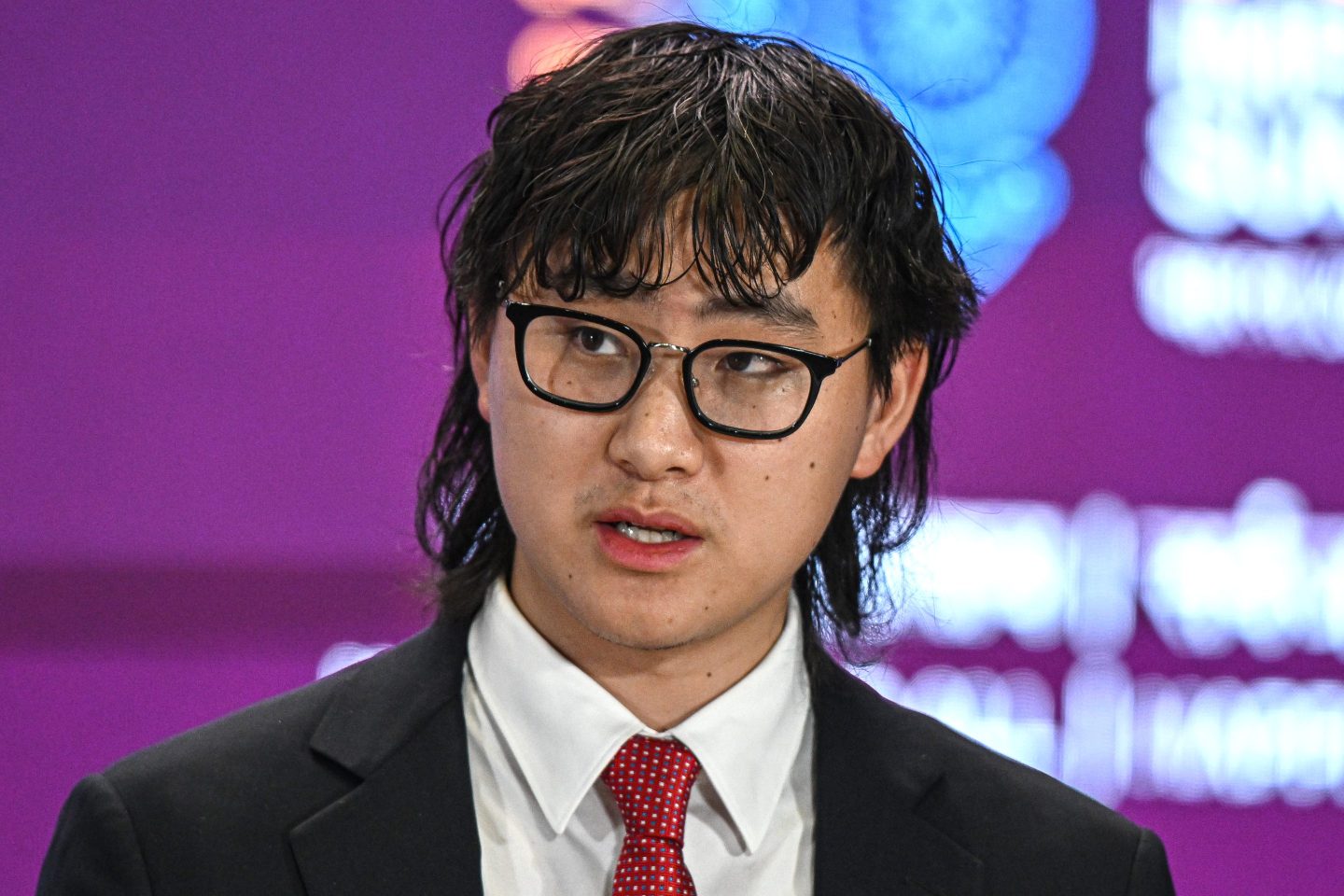
Meta has officially unveiled Muse Spark, its latest and most advanced artificial intelligence model, marking a significant stride in the company’s ambitious AI roadmap. Spearheaded by Chief AI Officer Alexandr Wang, Muse Spark is designed to narrow the performance gap with leading models from OpenAI and Google, showcasing Meta’s commitment to developing cutting-edge AI capabilities.
Alexandr Wang and the Vision Behind Muse Spark
Alexandr Wang, who joined Meta nine months ago, has been instrumental in guiding the development of Muse Spark. His leadership signifies a strategic pivot for Meta, with a strong emphasis on building foundational AI models that can power a new generation of intelligent applications. Muse Spark is framed as an initial step toward Mark Zuckerberg’s vision of “personal superintelligence,” aiming to provide highly capable and versatile AI assistance across Meta’s ecosystem.

Key Features and Reasoning Modes
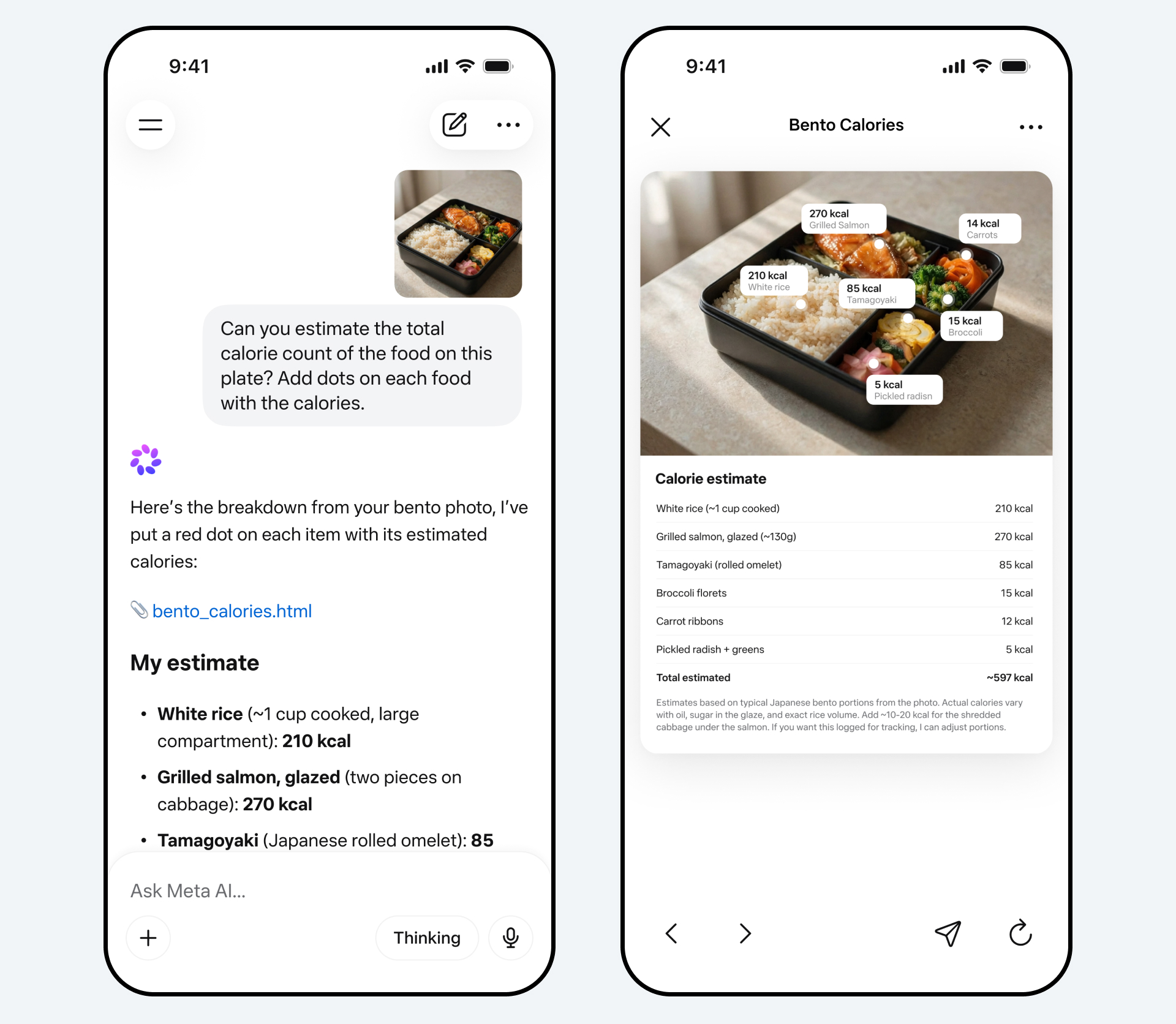
Muse Spark is a natively multimodal reasoning model, capable of accepting text, image, and voice inputs (with text-only output currently). Its innovative architecture includes three distinct reasoning modes:
- ⚡ Instant: Designed for fast responses to casual queries, simple lookups, and conversational exchanges.
- 🧠 Thinking: Provides deeper, step-by-step analysis for more complex problems.
- 🔮 Contemplating: This mode is a key differentiator, orchestrating multiple AI agents to reason in parallel, collaborate, and synthesize findings. It is specifically designed for scientific and research problems.
Benchmarks and Competitive Landscape
Muse Spark has quickly positioned itself as a formidable contender in the AI landscape. It scores 52 on the Artificial Analysis Intelligence Index, placing it among the top 5 models globally, behind GPT-5.4 (57), Gemini 3.1 Pro (57), and Claude Opus 4.6 (53) [1].

A detailed comparison reveals its strengths and areas for improvement:
| Benchmark | Muse Spark | GPT-5.4 | Gemini 3.1 Pro |
|---|---|---|---|
| AI Intelligence Index | 52 | 57 | 57 |
| HealthBench Hard 🏆 | 42.8 | 40.1 | 20.6 |
| CharXiv Reasoning 🏆 | 86.4 | 82.8 | 80.2 |
| FrontierScience 🏆 | 38.3% | 36.7% | 23.3% |
| HLE (Contemplating) 🏆 | 50.2% | 43.9% Pro | 48.4% DT |
| MedXpertQA | 78.4 | 77.1 | 81.3 |
| ZeroBench (Visual) | 33.0 | 41.0 | 29.0 |
| ARC-AGI-2 ❌ | 42.5 | 76.1 | 76.5 |
| Terminal-Bench ❌ | 59.0 | 75.1 | 68.5 |
Strengths: Health and Reasoning
Muse Spark demonstrates exceptional performance in health-related benchmarks, leading with a score of 42.8 on HealthBench Hard, surpassing GPT-5.4 (40.1) [1]. It also excels in multimodal understanding, achieving 80.5% on MMMU-Pro and an impressive 86.4% in figure and chart understanding (CharXiv), outperforming GPT-5.4 (82.8%) in this area. The Contemplating mode, with its multi-agent orchestration, achieves 50.2% on Humanity’s Last Exam (No Tools), outperforming Gemini 3.1 Deep Think (48.4%) and GPT-5.4 Pro (43.9%) [1].
Areas for Improvement: Coding and Abstract Reasoning
Despite its strengths, Muse Spark currently trails in certain domains. It scores lower in coding tasks (Terminal-Bench 59.0 vs. GPT-5.4’s 75.1), abstract reasoning (ARC-AGI-2 42.5 vs. GPT-5.4’s 76.1), and agentic office tasks (GDPval-AA 1,444 ELO vs. 1,672) [1]. These areas indicate potential for future development and refinement.
Training Efficiency and Availability
Meta highlights Muse Spark’s high training efficiency, achieving comparable capabilities to Llama 4 Maverick with over 10 times less compute. This demonstrates a deliberate and scientific approach to model scaling, optimizing for performance while minimizing resource consumption.

Currently, Muse Spark is available through Meta’s platforms, including meta.ai and the Meta AI app, with planned integration into WhatsApp, Instagram, Facebook, Messenger, and AR glasses. Access to its private preview API is limited to select partners, and unlike Meta’s Llama series, Muse Spark is a closed-source model, meaning its code is kept private. Meta has indicated that it may open-source parts of the model in the future.
Conclusion
Meta’s Muse Spark represents a significant advancement in AI, particularly in multimodal reasoning and specialized domains like health. While it faces stiff competition from established models like GPT-5.4 and Gemini 3.1 Pro, its unique Contemplating mode and impressive training efficiency position it as a key player in the evolving AI landscape. As Meta continues to integrate Muse Spark across its vast product ecosystem, its impact on personal and professional AI applications is expected to grow substantially.