




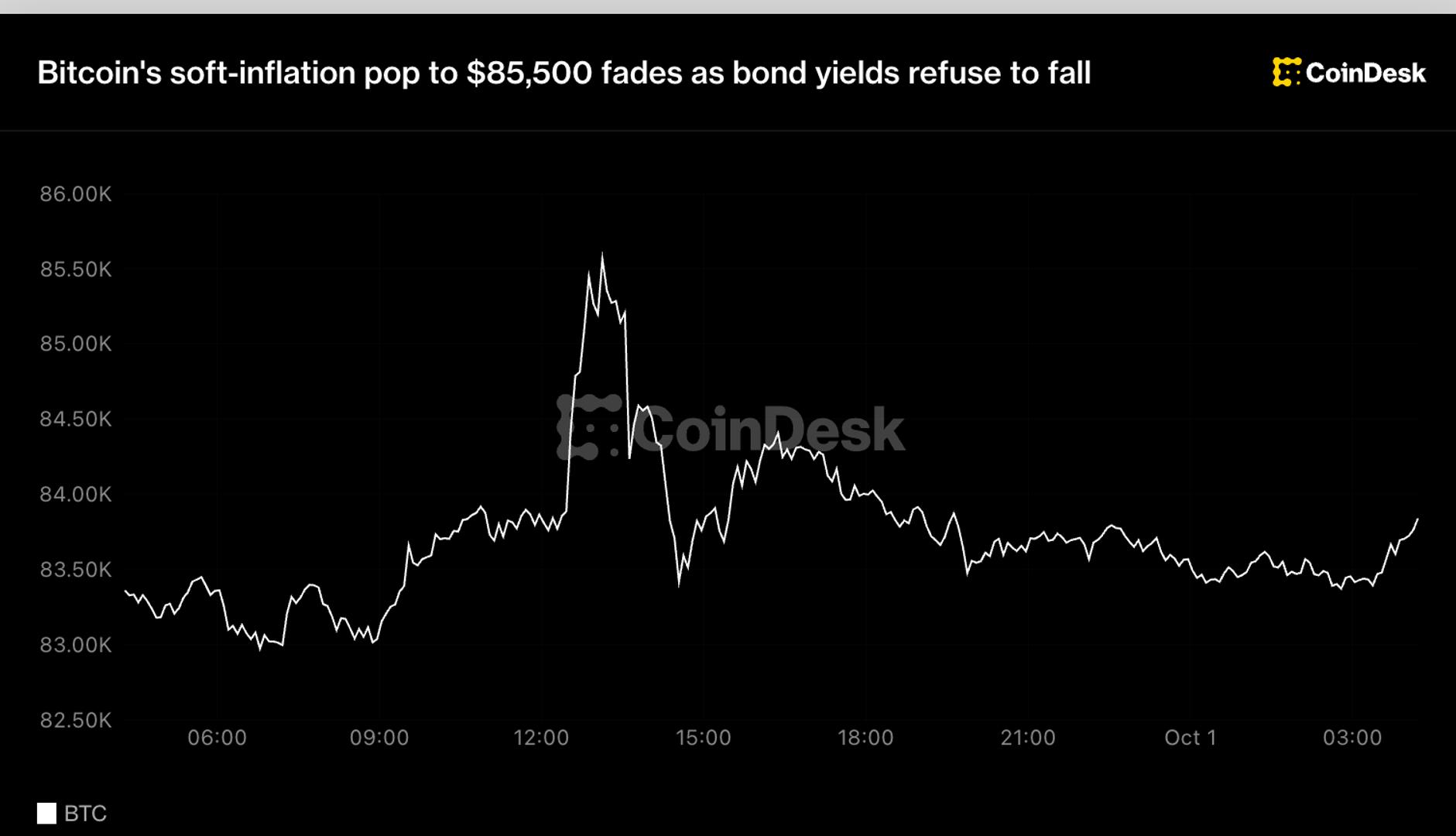
Bitcoin rally fades is the latest message from crypto markets after a softer-than-expected U.S. inflation report briefly pushed BTC above $85,500 before the move lost strength.
According to CoinDesk, bitcoin was trading just above $83,700 during Thursday Asian morning hours. The initial move higher came after inflation data cooled more than expected, but the relief rally did not hold because U.S. Treasury yields remained stubbornly high.
That combination captures the current market problem for crypto. Softer inflation is supportive because it can reduce pressure on the Federal Reserve to keep tightening policy. High bond yields, however, continue to make risk assets work harder for every rally.
A softer inflation print was not enough

CoinDesk reported that August’s PCE inflation data showed prices up 3.4% from a year earlier, with core prices excluding food and energy up 3.0%. That was cool enough to reduce immediate concern about another Federal Reserve rate increase in October.
The market response was quick. Bitcoin moved back above $85,000 as investors treated the data as a relief signal. But the move faded as bond yields refused to fall meaningfully. The 10-year Treasury yield stayed near 5.28%, while the 30-year yield held around 5.62% after touching its highest level since 2002.
For crypto traders, the yield level matters as much as the inflation print itself. When government bonds offer high returns, speculative assets such as bitcoin, ether, Solana and other major tokens face a tougher comparison. Investors can demand more proof before chasing upside.
Altcoins showed a mixed risk signal
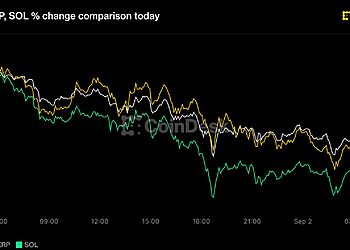
The broader crypto market was not uniformly weak. HYPE led major cryptocurrencies with a move of about 3%, while Dogecoin gained nearly 2%. Ether, BNB, TRX and ZEC each added less than 1%, according to CoinDesk’s market data. XRP was essentially flat, and Solana lagged with a decline of nearly 1%.
That mixed performance suggests traders are still willing to rotate into selected tokens, but not with enough conviction to make the entire market break higher. Bitcoin remains the benchmark. If BTC cannot sustain gains above a key level, altcoin rallies can become short-lived.
The stronger U.S. dollar added another layer of pressure. A firmer dollar often tightens global liquidity conditions for risk assets. Crypto can still rally in that environment, but it usually needs a stronger catalyst than a single soft inflation print.
Why bond yields are controlling the next move
The key question is not whether inflation is cooling. It is whether yields will finally move lower in a sustained way. A lower 10-year yield would make it easier for risk assets to hold gains, because investors would face less competition from safe income.
CoinDesk’s report makes that point clearly through the market action: bitcoin could pop on softer inflation, but it could not hold the full move while the 10-year yield stayed near 5.3%. That makes the bond market the real gatekeeper for the next crypto rally.
The same setup affects technology stocks, growth assets and digital tokens. If yields ease, capital can move back into risk. If yields stay elevated, investors may continue selling rallies instead of chasing them.
This is why crypto traders are watching macro data almost as closely as blockchain-specific news. A token can have strong network activity, exchange flows or derivatives positioning, but those factors can be overwhelmed when the bond market is repricing the cost of capital. In that environment, bitcoin becomes a macro asset first and a crypto-native story second.
What crypto investors should watch now
The immediate levels to watch are the 10-year Treasury yield, the U.S. dollar, and whether bitcoin can reclaim and hold the $85,000 area. A clean move above that zone would suggest the inflation relief trade is still alive. Another rejection would show that macro pressure remains in control.
Investors should also watch whether Solana’s weakness continues. When higher-beta majors underperform during a bitcoin bounce, it can signal hesitation beneath the surface. If altcoins recover quickly, the market may be healthier than the headline BTC fade suggests.
For now, the lesson is straightforward. Bitcoin received the data point it wanted, but not the yield move it needed. Until bond yields fall with conviction, every crypto rally may have to fight the same macro headwind.
Source: CoinDesk.