


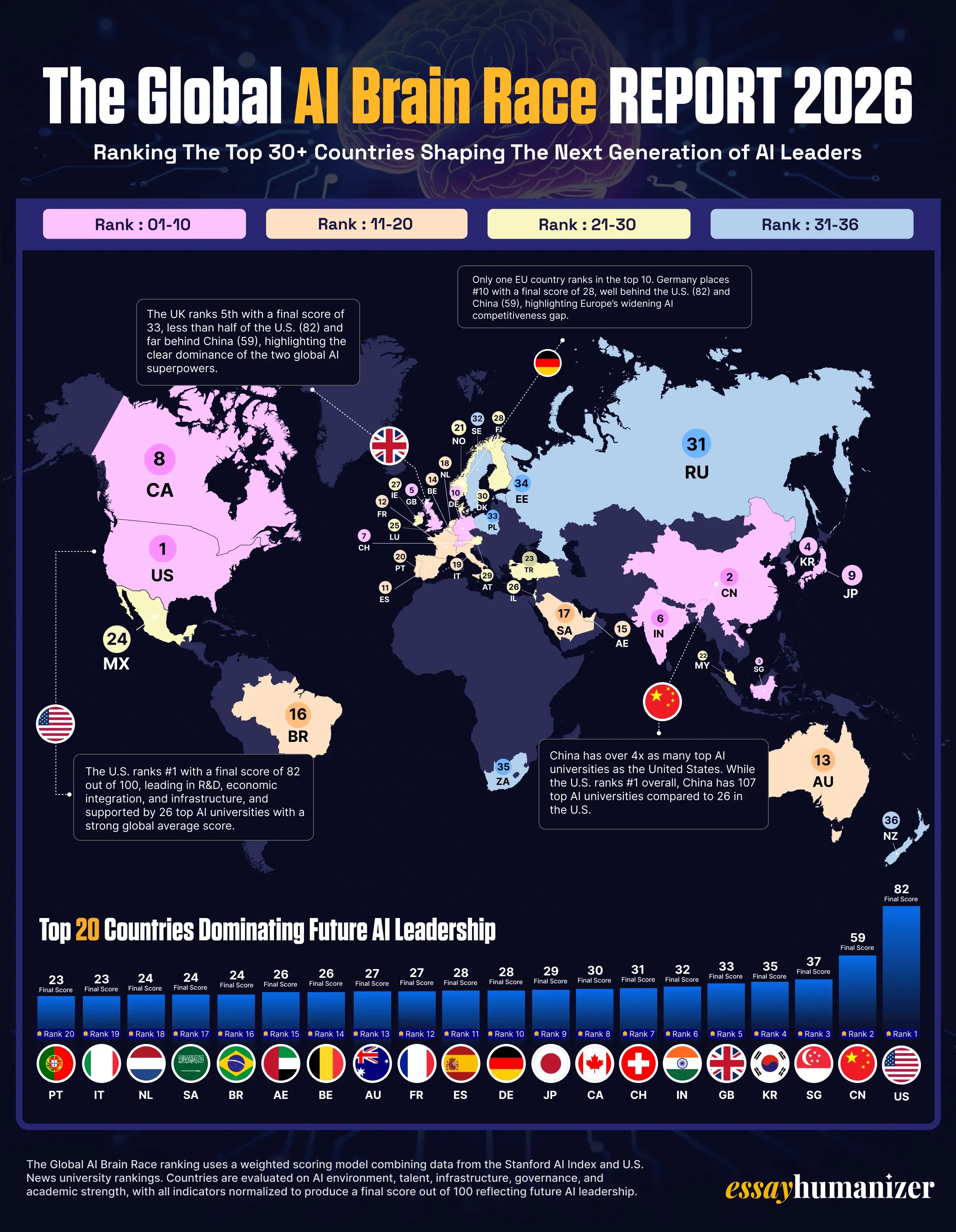
The global artificial intelligence landscape has reached a pivotal turning point. According to the newly released 2026 AI Index Report from the Stanford Institute for Human-Centered Artificial Intelligence (HAI), the era of undisputed American dominance in AI has come to an end. For the first time in nearly a decade, China has effectively erased the performance gap, creating a neck-and-neck race for global technological supremacy.
The Great Convergence: US vs. China AI Race
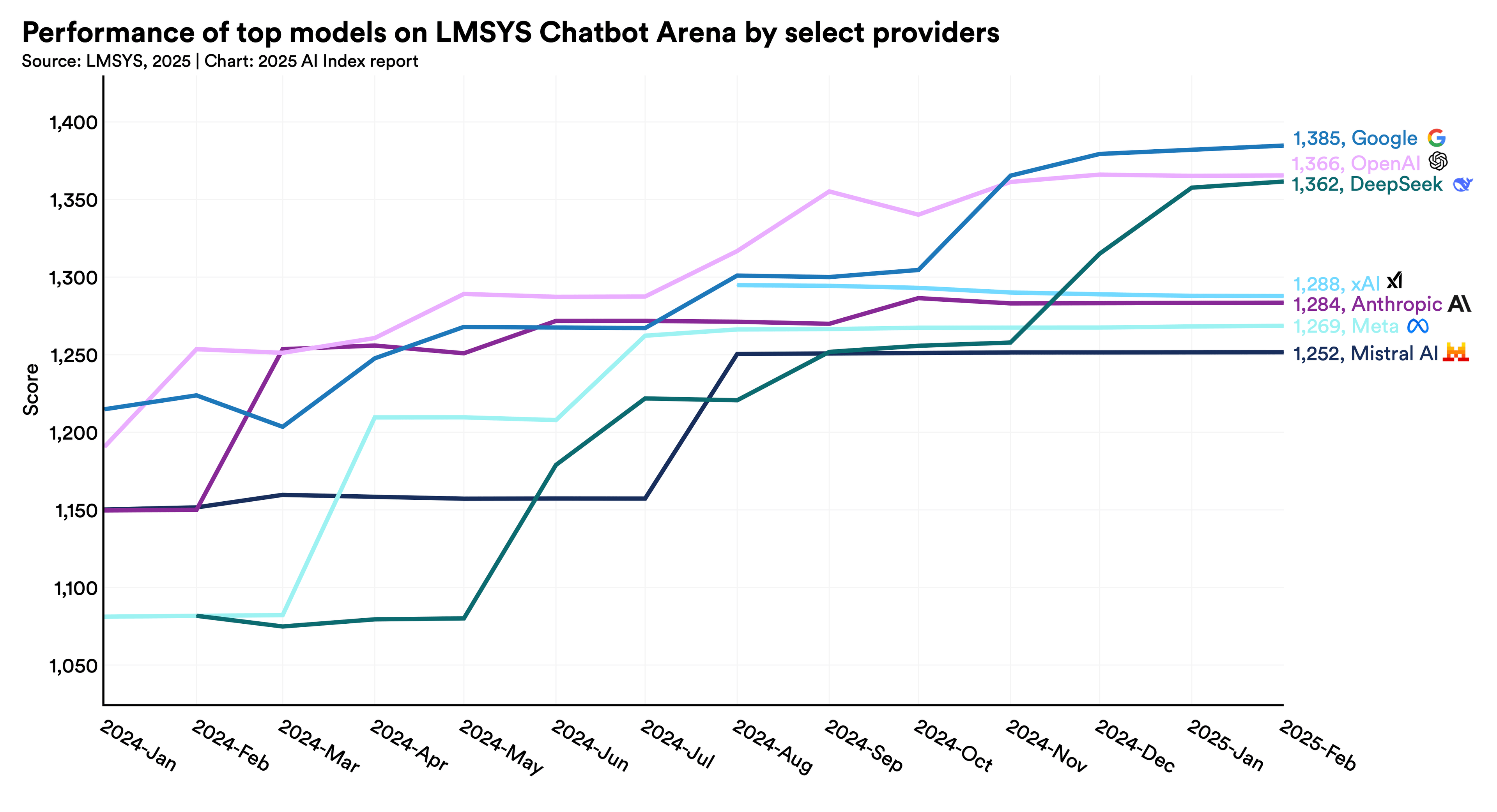
The report highlights a “Great Convergence” where U.S. and Chinese AI models are now trading places at the top of industry-standard benchmarks. While the United States maintains a lead in private investment and high-end hardware infrastructure, China has surged ahead in patents, research publications, and the rapidly growing field of “physical AI”—autonomous robotics.
| Metric | U.S. Standing | China Standing |
|---|---|---|
| Model Performance | Leading in LLMs | Leading in Physical AI/Robotics |
| Investment | $172B Consumer Surplus | Rapidly Scaling Infrastructure |
| Research Output | High Impact Citations | Highest Volume of Patents |
| Adoption Rate | 28.3% (Regular Users) | >80% (Anticipated Impact) |
A Global Vibe Shift: Trust vs. Adoption
Despite the technological leaps, the report reveals a deepening “digital divide” and a significant erosion of public trust. While adoption of generative AI has outpaced the internet and smartphones—with 53% of the global population using it regularly—transparency is at an all-time low. Leading labs like OpenAI, Google, and Anthropic have largely ceased disclosing dataset sizes and training durations, leading to concerns about “black box” governance.
Key Global Findings
- Innovation Density: South Korea has emerged as the per-capita leader in AI innovation.
- Sovereign AI: 44 nations now operate state-backed supercomputing clusters to ensure technological sovereignty.
- The Workforce Impact: 73% of experts are optimistic about jobs, but only 23% of the general public shares that optimism as AI-exposed fields see declining youth employment.
The Hidden Cost of Intelligence
The 2026 report also shines a harsh light on the environmental impact of the AI boom. Training a single state-of-the-art model like Grok-4 now generates over 72,000 tons of CO2, while the water required for GPT-4o’s inference workloads is enough to sustain 12 million people. As the race for dominance intensifies, the sustainability of these models is becoming as critical as their performance.
Conclusion: The New AI World Order
The 2026 AI Index makes one thing clear: the future of AI is no longer a Western-centric story. With China matching the U.S. in performance and South Korea leading in innovation density, the global stage is more crowded and competitive than ever. For businesses and governments, the focus is shifting from “if” they should adopt AI to “how” they can govern it transparently and sustainably in this new multipolar world.