





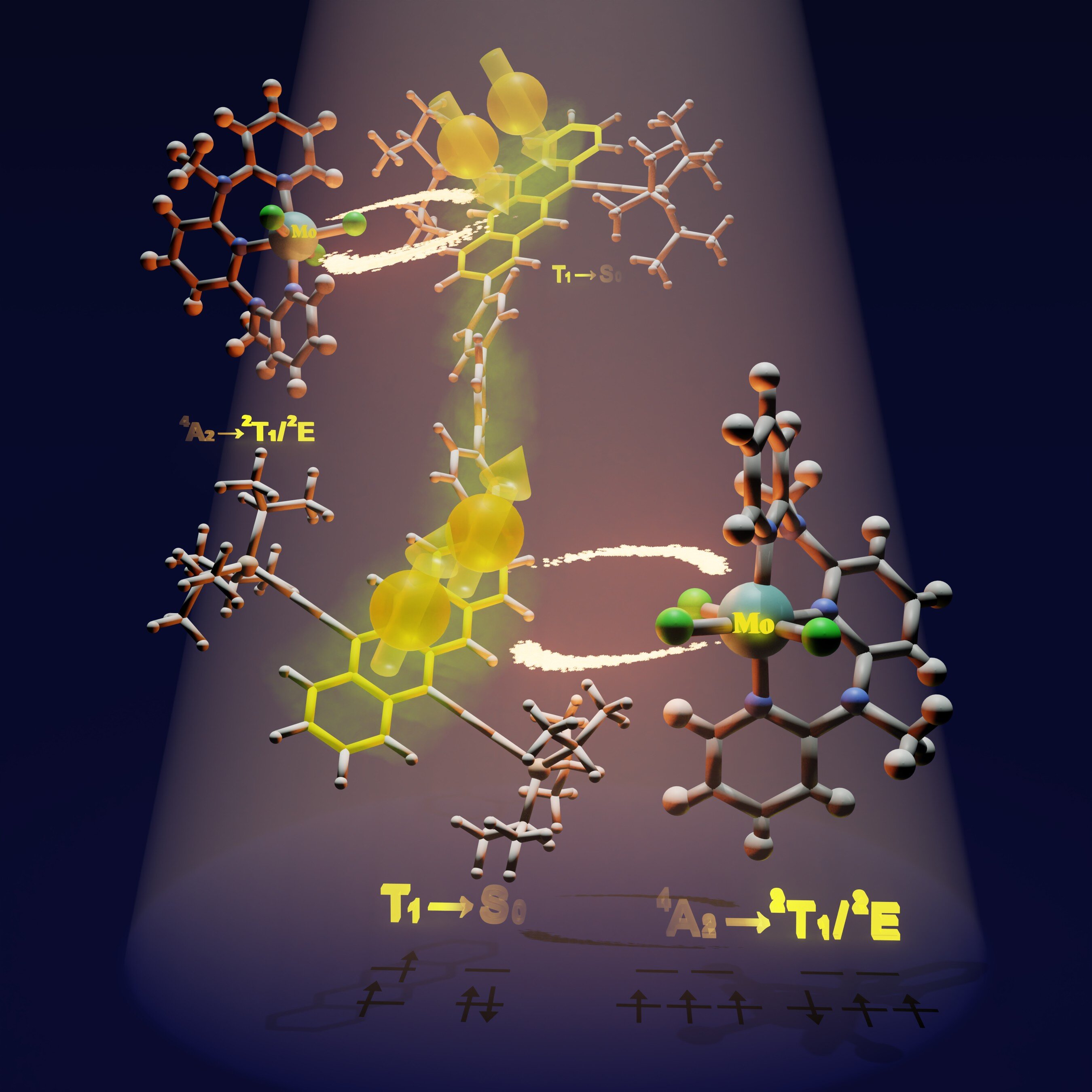
In a groundbreaking development that challenges the fundamental limits of physics, researchers at Kyushu University have unveiled a new “spin-flip” solar cell technology. This innovation has successfully achieved an unprecedented 130% efficiency, effectively producing more energy carriers than the number of photons it absorbs. This milestone marks a significant leap toward a future where solar energy could become far more powerful and efficient than ever imagined.
Breaking the Physical Ceiling of Solar Energy


For decades, the efficiency of traditional silicon-based solar cells has been constrained by the Shockley-Queisser limit, which caps the theoretical maximum efficiency at approximately 33.7%. This limitation exists because low-energy photons often lack the power to excite electrons, while high-energy photons lose their excess energy as heat. However, the team at Kyushu University, in collaboration with Johannes Gutenberg University Mainz, has found a way to bypass this “physical ceiling” using a process known as singlet fission (SF).
How “Spin-Flip” Technology Works
The core of this breakthrough lies in a molybdenum-based metal complex designed as a “spin-flip” emitter. In standard solar cells, one photon typically generates one exciton (an energy carrier). Through singlet fission, a single high-energy photon can be split into two lower-energy “triplet” excitons. The challenge has always been capturing these extra carriers before their energy is lost to the environment.
The “spin-flip” mechanism allows the system to change the spin of an electron during light absorption, enabling it to selectively capture and multiply these triplet excitons. By precisely engineering the energy levels of the metal complex, the researchers minimized energy “theft” by competing mechanisms like Förster resonance energy transfer (FRET), resulting in a quantum yield of 130%.
Comparing Solar Technologies: Traditional vs. Spin-Flip
| Feature | Traditional Silicon Cells | Kyushu “Spin-Flip” Breakthrough |
|---|---|---|
| Theoretical Limit | ~33.7% (Shockley-Queisser) | Potential to exceed 100% via multiplication |
| Energy Conversion | 1 Photon = 1 Electron | 1 Photon = Up to 2 Energy Carriers |
| Heat Loss | High (excess energy wasted) | Minimized (multiplied instead of wasted) |
| Efficiency Achieved | 20-25% (Commercial) | 130% (Quantum Yield in Lab) |
| Primary Material | Silicon | Molybdenum-based Metal Complex |
The Road to Commercialization

While the 130% efficiency represents a massive leap in laboratory settings, the technology is currently in the proof-of-concept stage. The researchers are now focused on integrating these molecular systems into solid-state devices that could eventually be manufactured as commercial solar panels. Beyond solar energy, this discovery has profound implications for LEDs and the emerging field of quantum technologies, where precise control over electron spin is paramount.
Conclusion
The Kyushu University breakthrough is more than just an incremental improvement; it is a paradigm shift in how we harvest light. By turning the “impossible” into reality, scientists have opened a new frontier in renewable energy. As the world races toward a carbon-neutral future, technologies like “spin-flip” solar cells could provide the high-density power needed to sustain a modern, electrified society.