


The Future of Computing is No Longer Flat
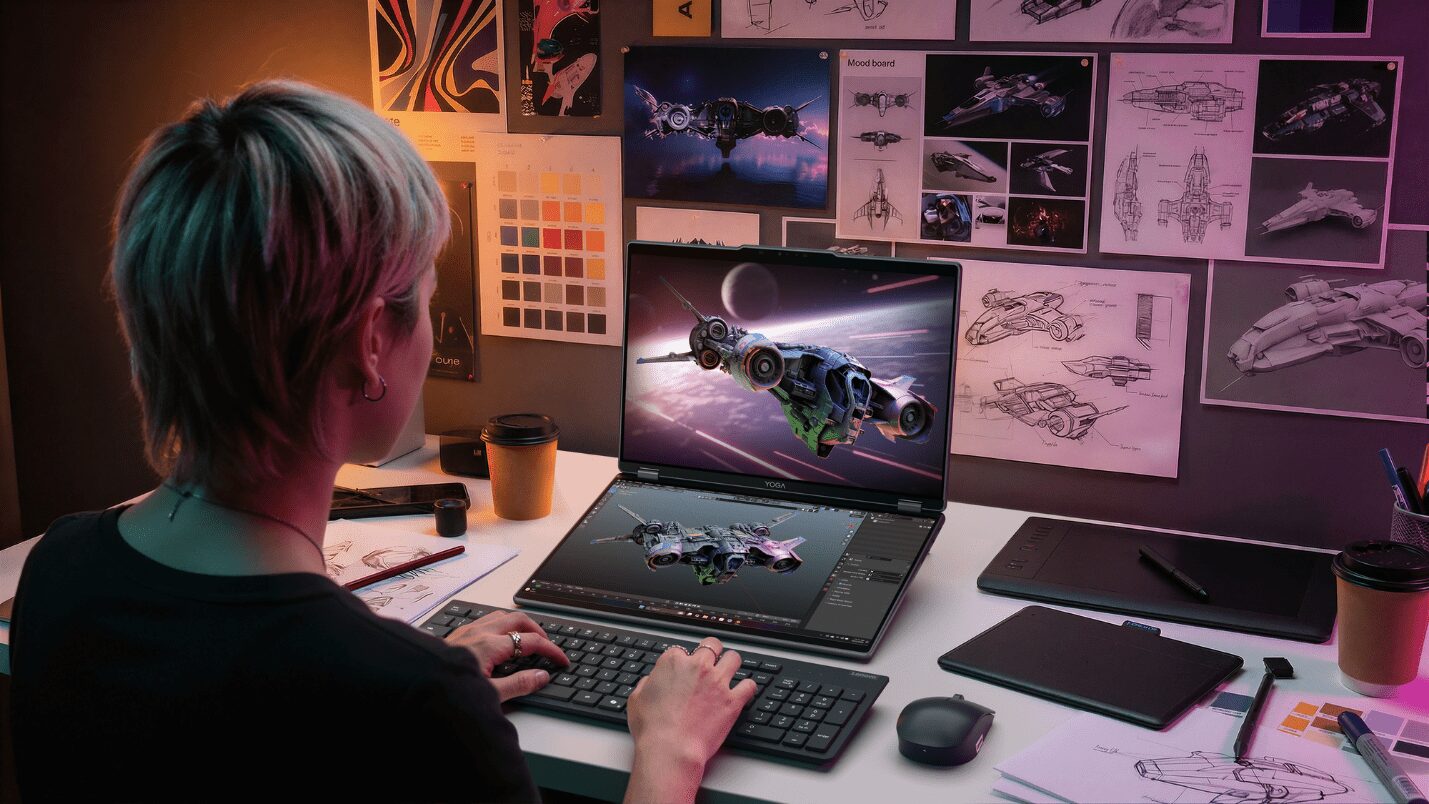
As the doors opened at MWC 2026 in Barcelona, one thing became crystal clear: the era of the conventional laptop is facing its most significant challenge yet. While foldables and AI-integrated devices dominated the pre-show hype, Lenovo has stolen the spotlight with a concept that feels like it was ripped straight from a science fiction film. The Lenovo Yoga Book Pro 3D isn’t just another dual-screen laptop; it’s a portal into a world where digital content escapes the confines of a 2D panel.
Following the trend of innovative hardware seen earlier this week, such as the Xiaomi 17 Ultra Leica Leitzphone, Lenovo is pushing the boundaries of how we interact with our machines. The Yoga Book Pro 3D leverages advanced lenticular lens technology to provide a high-fidelity, glasses-free 3D experience that actually works.
Glasses-Free 3D Meets Hand-Tracking Mastery
The standout feature of the Lenovo Yoga Book Pro 3D MWC 2026 showcase was undoubtedly the seamless integration of hand-tracking. Unlike previous attempts at 3D laptops that required rigid seating positions and specialized eyewear, Lenovo’s new system uses an array of high-speed sensors to track the user’s eyes and hands in real-time. This allows users to “reach out” and manipulate 3D models floating above the dual OLED displays.
During our hands-on session, the responsiveness was startling. Designers could rotate CAD models with a simple flick of the wrist, and the depth perception remained stable even when moving from side to side. It’s a level of immersion that traditionally required a bulky VR headset, now condensed into a portable, “chonky” yet elegant dual-screen form factor.
A Second Screen That Actually Adds Value
The lower screen of the Yoga Book Pro 3D isn’t just a secondary monitor or a virtual keyboard. Lenovo has introduced specialized “cutouts” and magnetic modules that allow physical tools—like precise styluses or creative control knobs—to be dropped onto the glass and instantly recognized by the system. This hybrid approach bridges the gap between tactile physical controls and digital flexibility.
According to reports from The Verge, this concept isn’t just about the “wow” factor. Lenovo is targeting 3D artists, medical professionals, and engineers who need to visualize spatial data without the friction of wearing additional hardware.
Conclusion: Is the World Ready for 3D?
The Lenovo Yoga Book Pro 3D MWC 2026 concept serves as a bold statement. While it remains a concept for now, the level of polish suggests that a consumer version might not be far off. As we move further into 2026, the line between our physical and digital worlds continues to blur. Whether it’s through mobile photography or spatial computing, the message from Barcelona is clear: the future is multi-dimensional.
Stay tuned for more updates as we continue to cover the most exciting breakthroughs from the MWC 2026 show floor.