





ChatGPT ads are expanding beyond the early pilot stage, with OpenAI saying the advertising program has now launched in the United Kingdom, Mexico, Brazil, Japan, and South Korea. The August 11, 2026 update follows earlier tests in the United States, Canada, Australia, and New Zealand.
The move is important because it shows OpenAI is turning advertising from an experiment into a broader business line. ChatGPT is expensive to operate, especially as free and low-cost users expect fast access to powerful models. Ads give OpenAI another way to fund access while preserving paid tiers for users who do not want advertising.
Where ChatGPT ads are available now
OpenAI originally began testing ChatGPT ads in the United States on February 9, 2026. The test applied to logged-in adult users on the Free and Go subscription tiers. Plus, Pro, Business, Enterprise, and Education users were not included in the ad experience.
In March, OpenAI said early results were encouraging and announced expansion plans for Canada, Australia, and New Zealand. In May, it named the United Kingdom, Mexico, Brazil, Japan, and South Korea as the next pilot markets. The latest update confirms that ads have now launched in those five countries.
OpenAI says it plans to keep expanding to more markets this year. Businesses interested in advertising can sign up for updates through OpenAI’s advertiser page, suggesting the company is preparing for a larger commercial rollout while still describing the program as a test.
OpenAI says answers remain independent
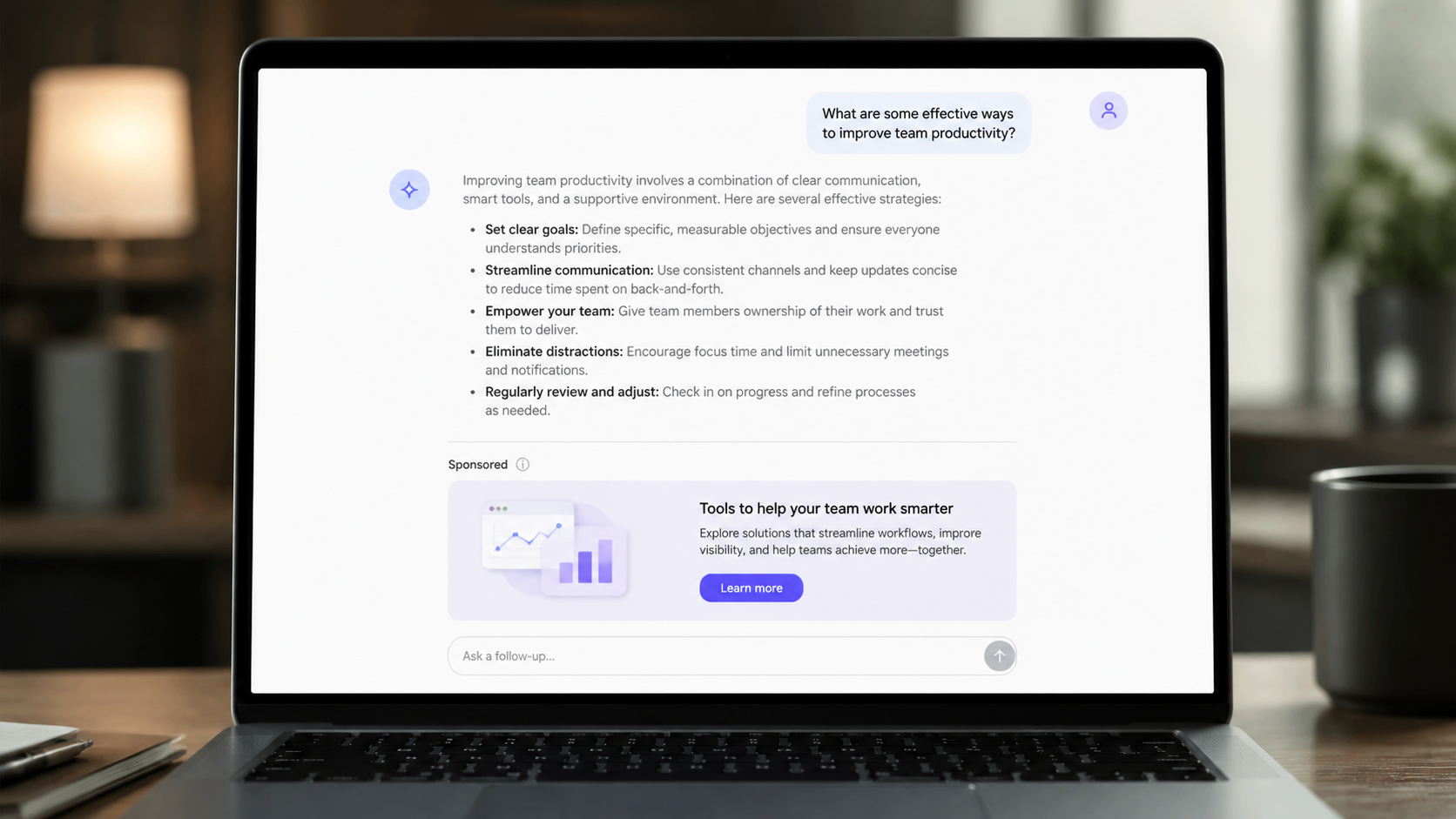
The biggest trust question is whether ads influence ChatGPT’s answers. OpenAI says they do not. According to the company, answers remain independent and ads are clearly labeled as sponsored and visually separated from organic responses.
That separation will be critical. Users rely on ChatGPT for learning, work, coding, writing, planning, and personal decisions. If people suspect answers are being shaped by advertisers, trust could erode quickly. Search engines have managed the line between ads and organic results for decades, but a conversational assistant feels more personal than a results page.
OpenAI says ad selection may use the topic of a conversation, past chats, and past interactions with ads. For example, a user researching recipes might see ads for meal kits or grocery delivery. That kind of targeting could make ads more relevant, but it also raises privacy expectations that OpenAI will need to handle carefully.
Privacy and sensitive topics are the harder test
OpenAI says advertisers do not receive access to chats, chat history, memories, or personal details. Advertisers receive aggregate performance information such as views or clicks. The company also says it will not show ads in accounts where the user says, or OpenAI predicts, that the user is under 18.
Ads are also not eligible to appear near sensitive or regulated topics such as health, mental health, or politics during the test. Those guardrails matter because a conversational assistant can touch far more sensitive moments than a normal web page. A user might ask about anxiety, debt, medical symptoms, legal problems, or personal conflict in the same product where ads appear elsewhere.
The company says users will be able to dismiss ads, share feedback, learn why an ad was shown, delete ad data, and manage ad personalization. OpenAI also says Free tier users can opt out of ads in exchange for fewer daily free messages.
Why AI advertising could look different from search ads
Advertising in a chatbot is not the same as advertising in search. Search ads usually appear next to a query and a list of links. In ChatGPT, the user may be exploring a problem over several turns, comparing options, or working toward a decision. That gives ads the chance to be highly relevant, but also more intrusive if handled badly.
OpenAI frames the long-term opportunity as connecting people with useful products and services while maintaining a clear separation from the answer. The key question is whether users experience those ads as helpful suggestions or as commercial pressure inside a trusted assistant.
The expansion of ChatGPT ads shows that AI companies are still searching for sustainable economics. Subscriptions alone may not cover every use case, especially for global free access. Advertising may become a major funding model for consumer AI, but only if OpenAI can keep user trust intact while scaling the business.
Source: OpenAI