





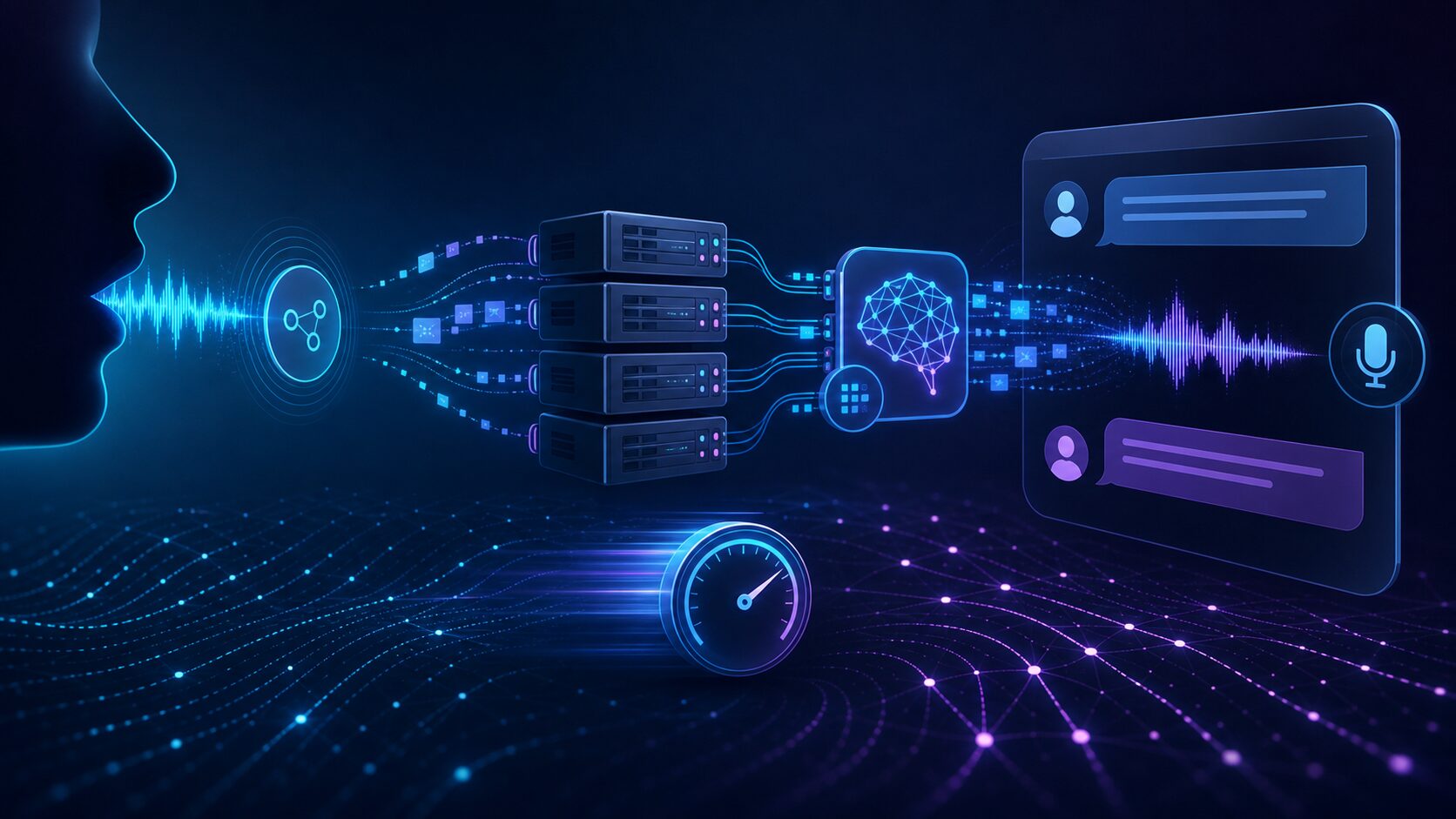
GPT-Live voice AI is OpenAI’s attempt to make spoken interaction feel less like turn-taking with a machine and more like a live conversation, according to a new engineering post explaining how the system was built.
The main shift is architectural. Earlier voice systems often waited for a separate turn detector to decide when the user had stopped talking. If the detector guessed too soon, it interrupted the user. If it waited too long, the assistant felt sluggish. GPT-Live removes that detector from the main audio path and lets the voice model listen and speak at the same time.
Why full-duplex speech matters
Human conversation is messy. People pause, overlap, interrupt themselves, change direction, and use small acknowledgements while someone else is speaking. A rigid voice assistant that waits for a perfect silence before responding can feel unnatural, even if the underlying model is intelligent.
OpenAI says GPT-Live voice AI uses a full-duplex voice model, meaning it can process incoming audio and produce speech concurrently. The goal is not simply faster answers. It is smoother timing, fewer awkward pauses, and better handling of the rhythm that makes spoken conversation feel alive.
That does not mean every task stays inside the voice model. When deeper reasoning, search, or tool use is needed, GPT-Live can delegate work to frontier models on a separate path. The important design choice is that this extra work should not block the live audio loop unless the conversation actually needs the result.
The live audio path had to stay small
OpenAI describes the system as a low-latency media architecture rather than a normal request-response service. Audio streams into the model, speech streams back to the user, and application logic runs behind an asynchronous boundary. That separation keeps slow tool calls or backend services from interrupting speech delivery.
The company also moved key media frontend and inference logic to Go, replacing an earlier Python asyncio implementation. OpenAI says that improved frame-delivery smoothness enough that the new system’s p95 matched the old system’s p50. In a voice product, that kind of tail-latency improvement matters because users hear irregular delivery as delay, clipping, or awkward silence.
WebRTC provides the transport foundation. It is built for live media, can handle packet loss, and can smooth playback when network timing is imperfect. For a real-time assistant, that is more appropriate than treating audio as a file uploaded for later processing.
Long conversations create state problems
A continuous voice session can last far longer than a simple chat request. Context grows, model instances change, and the system may need to compact conversation history when limits approach. Doing that directly on the live path would create audible pauses.
OpenAI’s solution is a managed handoff. A replacement model instance can be warmed up beside the current one, prefilled with the session context, and tested in parallel before traffic moves over. The same idea supports context compaction. The old instance keeps the conversation going while the system prepares a smaller, updated context for the new instance.
This detail is useful because it shows that voice AI is not only a model problem. It is also a distributed-systems problem. The assistant has to remember enough, stay responsive, survive backend transitions, and keep media flowing while other services do work in the background.
Startup speed is part of the experience
OpenAI also focused on the time between clicking the voice button and hearing a usable response. Standard WebRTC setup involves several network round trips, so the team worked on protocol improvements grouped under WARP, or WebRTC Abridged Roundtrip Protocol.
The company says WARP can reduce media and data startup from six network round trips to one by combining and pre-negotiating parts of the connection process. It also developed Instant Connect, which prepares signaling parameters ahead of time without reserving server capacity. Together, those changes help a session begin with far less waiting.
The practical takeaway is that GPT-Live voice AI is not just about better speech synthesis. It is a full-stack attempt to reduce friction across model inference, transport, delegation, context management, and session startup. If voice is going to become a normal interface for computers, that engineering work matters as much as the model’s raw intelligence.
Source: OpenAI